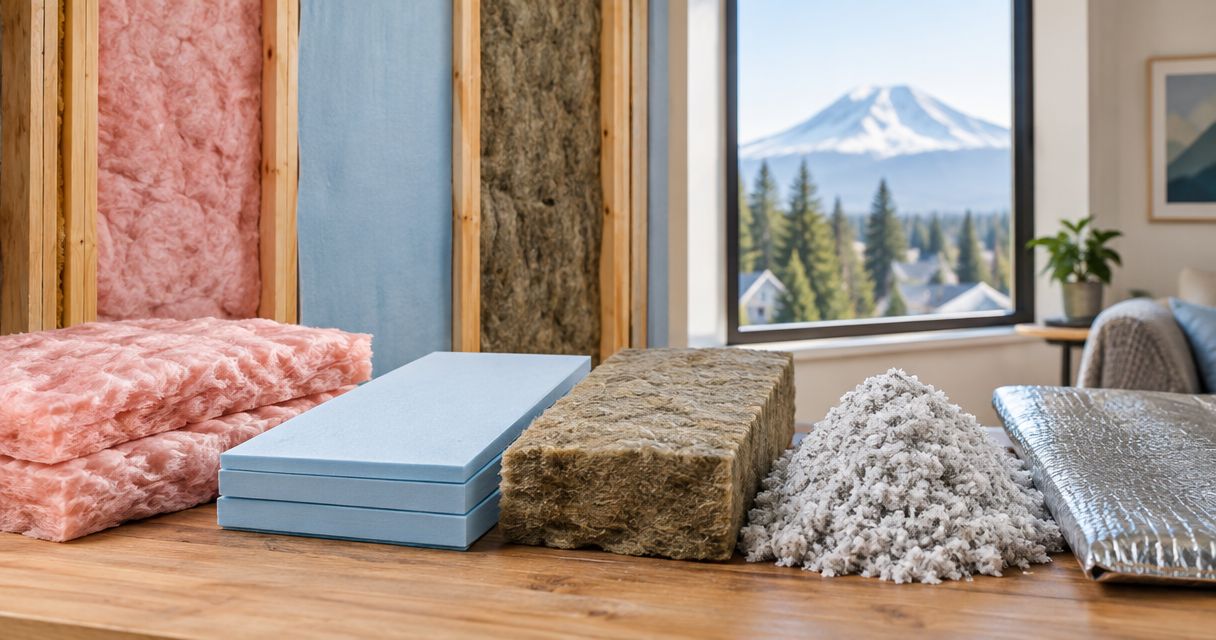
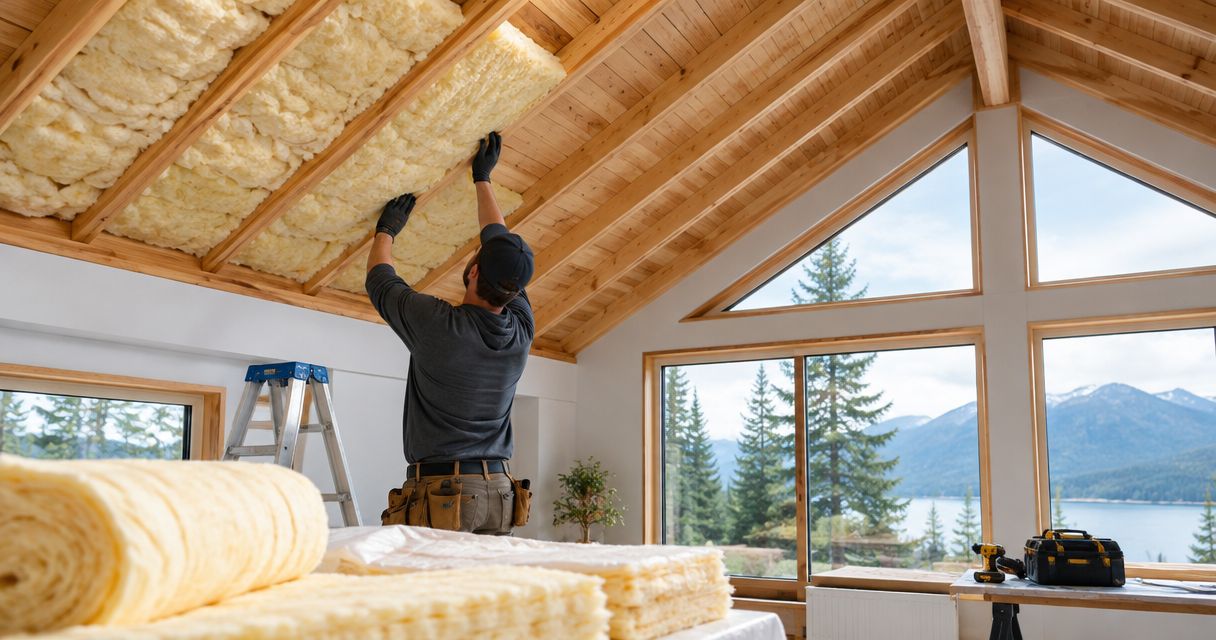
Vaulted and cathedral ceilings look great and heat like a barn if the insulation is wrong. Closed-cell spray foam is the best insulation for vaulted ceilings in most Pacific Northwest homes, but the right pick depends on whether your roof assembly is vented or unvented, how deep your rafters are, and what you're trying to solve — heat loss, ice damming, or noise from rain on the roof.
- Closed-cell spray foam is the best insulation for vaulted ceilings in Pacific Northwest homes in 2026 because it air-seals and insulates in one step.
- Open-cell spray foam wins for interior sound control when a vaulted ceiling has full rafter depth exposed.
- Fiberglass batts are the cheapest option but trap moisture in unvented cathedral ceilings around Seattle and Tacoma.
- Mineral wool batts balance fire resistance and cost for vented vaulted assemblies.
- AT Foam installs closed-cell and open-cell foam in vaulted rooflines across Seattle, Tacoma, and Olympia.
Why this matters
Vaulted ceilings don't have an attic buffer between the living space and the roof deck. Whatever insulation goes into that rafter cavity is the only thing standing between your living room and Washington's wet, mild-but-persistent winters.
Get it wrong and you get two failure modes: ice damming at the eaves from heat leaking through the roof, or trapped moisture inside the cavity that rots the sheathing from the inside. Both are common in older homes across insulation types for older Pacific Northwest homes where the original assembly was never designed for today's energy code.
The fix isn't always more insulation — it's the right material for the assembly type. AT Foam sees this constantly on retrofit jobs: a homeowner adds batts to a vented cathedral ceiling and the room still feels drafty because nobody sealed the air leaks first.
What makes the best insulation for vaulted ceilings
- R-value per inch — rafter depth is fixed, so a material that hits more R-value in less space wins in tight cavities
- Air sealing — gaps around wiring, can lights, and top plates leak more heat than the insulation itself blocks
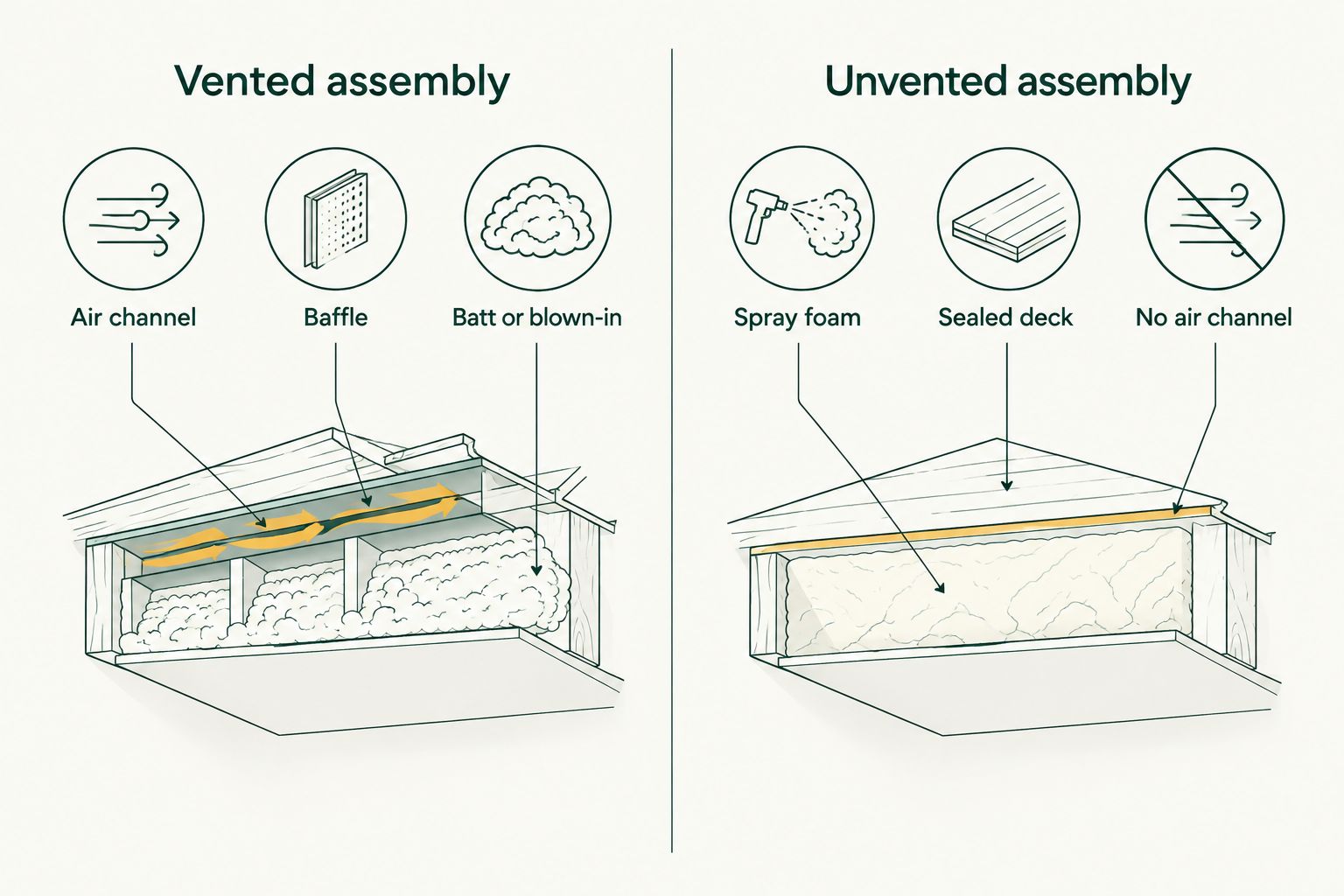
- Moisture resistance — Pacific Northwest humidity and rain make vapor management non-negotiable in an unvented roof
- Vented vs. unvented compatibility — some materials only work safely in one assembly type
- Fire and code compliance — Washington's energy code sets minimum ceiling R-values that vaulted assemblies often struggle to hit
- Sound dampening — matters more in vaulted rooms because there's no attic space to absorb rain and wind noise
At a glance
| Insulation | Best for | Standout feature | Key limitation |
|---|---|---|---|
| Closed-cell spray foam | Unvented vaulted ceilings with tight rafters | Air seals and insulates in one application | Rigid once cured, harder to retrofit wiring later |
| Open-cell spray foam | Interior sound control in exposed rafters | Expands to fill irregular cavities completely | Lower R-value per inch, needs full rafter depth |
| Rigid foam board | Above-deck retrofits without removing drywall | Continuous insulation with no thermal bridging | Requires roof tear-off or new construction access |
| Mineral wool batts | Vented assemblies needing fire resistance | Naturally fire-resistant, holds R-value when damp | Needs a functioning vent channel to perform |
| Fiberglass batts | Budget vented cathedral ceilings | Lowest material cost of the group | Loses R-value fast if compressed or wet |
| Blown-in cellulose | Dense-pack retrofits through small access holes | Fills gaps around obstructions without demo | Settling risk if not installed to density spec |
1. Closed-cell spray foam: best insulation for tight, unvented vaulted ceilings
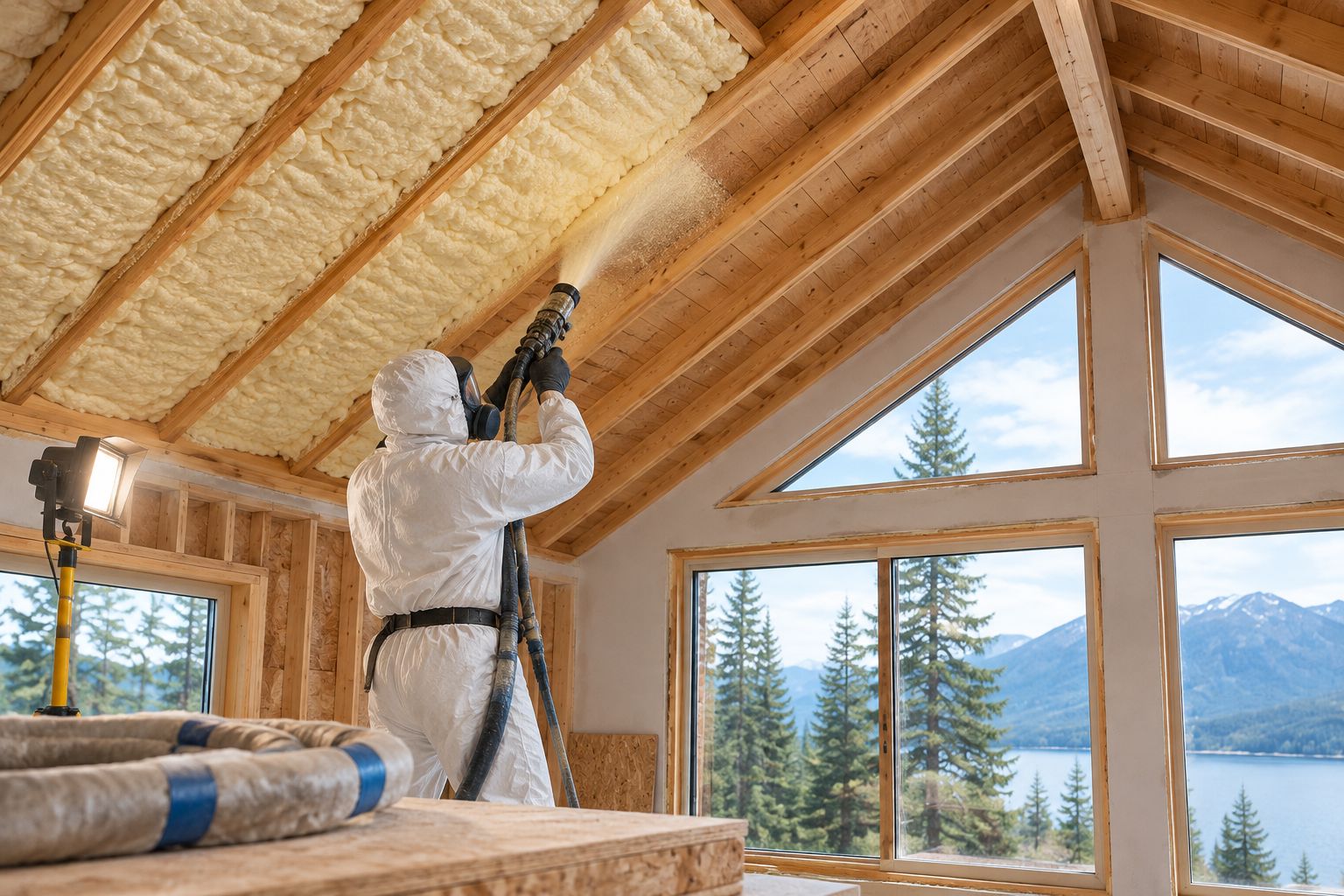
Closed-cell spray foam is a rigid, high-density foam sprayed directly into the rafter cavity, where it expands and cures into an air-sealed layer that also acts as a vapor retarder. At roughly R-6.5 per inch, it fits more insulating power into a shallow 2x8 or 2x10 rafter bay than any batt or blown-in product.
This is the material AT Foam installs most often for unvented vaulted assemblies in Seattle, Tacoma, and Olympia because it solves the air leakage problem and the vapor problem in one pass.
Closed-cell spray foam pros:
- Highest R-value per inch of any common insulation material
- Doubles as an air barrier, cutting drafts around can lights and skylights
- Adds structural rigidity to the roof deck
- Performs well in unvented "hot roof" assemblies common in remodels
Closed-cell spray foam cons:
- Costs more per board foot than batts or cellulose — check current spray foam insulation cost in Seattle figures before budgeting
- Once cured, it's difficult to remove for future wiring or plumbing changes
- Requires a licensed installer for correct mix ratio and thickness
Closed-cell spray foam verdict: Buy. It's the strongest option for Pacific Northwest vaulted ceilings where rafter depth is limited and the assembly is unvented.
2. Open-cell spray foam: best for sound control in exposed-rafter ceilings
Open-cell spray foam is a softer, lower-density foam that expands more per unit of material, at about R-3.7 per inch. It needs full rafter depth to hit code-level R-values, so it fits best in newer construction with deeper 2x12 rafters or added strapping.
The cell structure absorbs sound better than closed-cell foam, which matters in a vaulted great room where rain on the roof carries straight into the living space.
Open-cell spray foam pros:
- Noticeably quieter under rain and wind than batt insulation
- Expands to fill gaps around wiring and irregular framing
- Lower material cost than closed-cell foam
Open-cell spray foam cons:
- Needs a vapor retarder in most Washington climate zones since it's vapor-permeable
- Requires deeper rafter cavities to reach adequate R-value
- Can absorb moisture if the roof ever leaks, unlike closed-cell foam
Open-cell spray foam verdict: Buy for new construction or additions with deep rafters and a priority on sound dampening.
3. Rigid foam board: best for above-deck retrofits without tearing out drywall
Rigid polyiso or XPS board goes on top of the roof deck, under new roofing, rather than inside the rafter cavity. It delivers roughly R-6 per inch and creates a continuous thermal layer with zero framing gaps.
This only makes sense when you're already replacing the roof — pulling shingles and sheathing to install board from above isn't a standalone insulation project.
Rigid foam board pros:
- Eliminates thermal bridging through rafters entirely
- Doesn't disturb interior finishes or drywall
- Pairs well with a vented or unvented assembly below
Rigid foam board cons:
- Only cost-effective when timed with a roof replacement
- Adds roof height, which can complicate flashing details
- Needs a qualified roofer, not just an insulation crew
Rigid foam board verdict: Hold unless a re-roof is already scheduled — then it's a strong upgrade.
4. Mineral wool batts: best for fire-resistant, vented vaulted ceilings
Mineral wool (rock wool) batts run about R-4.2 per inch and are naturally fire-resistant, since the material is spun from basalt rock rather than plastic resin. They also hold their R-value even if they get slightly damp, which fiberglass does not.
They only work correctly in a vented assembly with a clear air channel between the insulation and the roof deck.
Mineral wool batts pros:
- Fire-resistant without added chemical treatment
- Better moisture tolerance than fiberglass
- Good sound absorption for a batt product
Mineral wool batts cons:
- Requires a working vent channel, which older homes often lack
- Heavier and stiffer to install than fiberglass
- Higher cost than standard fiberglass batts
Mineral wool batts verdict: Hold for vented roofs where fire resistance or moisture tolerance matters more than upfront cost.
5. Fiberglass batts: best budget option for vented cathedral ceilings
Fiberglass batts run R-3.2 to R-3.8 per inch and remain the cheapest widely available insulation. In a properly vented vaulted ceiling with intact baffles, they can perform adequately.
The problem in the Pacific Northwest is that batts alone don't air-seal, and a poorly vented cathedral ceiling with batts is a known setup for condensation inside the cavity.
Fiberglass batts pros:
- Lowest material cost of any option on this list
- Widely available and easy for a crew to install fast
- No specialty equipment required
Fiberglass batts cons:
- Loses significant R-value when compressed into a tight cavity
- Does nothing to stop air leakage around fixtures and framing
- High moisture risk in unvented or poorly vented Washington roofs
Fiberglass batts verdict: Skip for unvented assemblies; Wait even in vented ones unless the vent channel is confirmed intact.
6. Blown-in cellulose: best for retrofitting without opening the ceiling
Dense-pack cellulose gets blown into the closed rafter cavity through small access holes, at roughly R-3.7 per inch. It's the practical choice when a homeowner wants better insulation in an existing vaulted ceiling without removing drywall.
Installation quality is everything here — underfilled cellulose settles over time and leaves gaps at the top of the cavity.
Blown-in cellulose pros:
- Installs through small holes, no drywall demolition
- Fills around wiring and obstructions well when dense-packed correctly
- Treated with borate for fire and pest resistance
Blown-in cellulose cons:
- Settling risk if the installer doesn't hit proper density
- Absorbs and holds moisture more than foam
- Harder to verify installation quality once the holes are patched
Blown-in cellulose verdict: Hold for retrofits where opening the ceiling isn't an option and the installer can document dense-pack density.
Get your vaulted ceiling assessed
A free estimate confirms vented vs. unvented before any material goes in.
How we ranked these
Each material was weighed against the six criteria above, with air sealing and moisture resistance weighted heaviest since those two failures cause the most callback repairs in Pacific Northwest vaulted ceilings. R-value per inch mattered most for homes with shallow rafter depth, where every fraction of an inch counts toward hitting code minimums.
Which insulation should you choose for your vaulted ceiling?
If you don't know your assembly type yet, that's the first question to answer — not the material. For most unvented vaulted ceilings in Seattle, Tacoma, and Olympia, closed-cell spray foam is the default recommendation because it handles air sealing, R-value, and vapor control together.
If your rafters are deep and the priority is quieting rain noise in a great room, open-cell spray foam is the better fit. Budget-driven vented retrofits do fine with mineral wool or fiberglass, provided the vent channel is actually functional — confirm that before buying materials, not after. For a broader look at contractors handling these installs, see house insulation contractors in Washington state.
FAQ
What is the best insulation for vaulted ceilings in the Pacific Northwest?
Closed-cell spray foam is the best insulation for vaulted ceilings in most Pacific Northwest homes because it air-seals and insulates the rafter cavity in one application. It performs especially well in unvented assemblies common in remodels and additions.
Is closed-cell spray foam better than open-cell for vaulted ceilings?
Closed-cell foam wins on R-value per inch and moisture resistance, making it the stronger pick for shallow or unvented rafter cavities. Open-cell foam costs less and dampens sound better when full rafter depth is available.
Can you use fiberglass batts in a cathedral ceiling in Seattle?
Fiberglass batts work only in a properly vented cathedral ceiling with an intact air channel above the insulation. In unvented assemblies, batts trap moisture and are not recommended for Seattle's climate.
Do vaulted ceilings need a vented or unvented assembly in Washington state?
Both assembly types are used in Washington, but the choice determines which insulation materials are safe. Unvented assemblies require spray foam or another air-impermeable material to prevent condensation inside the roof deck.
How much rafter depth do you need for spray foam insulation?
A 2x10 rafter, roughly 9.25 inches deep, holds enough closed-cell spray foam to reach strong R-values in a compact cavity. Open-cell foam needs more depth, closer to a 2x12, to reach the same performance.
Does mineral wool work in a vaulted ceiling?
Mineral wool batts work well in vented vaulted ceilings and add fire resistance that fiberglass lacks. They require a functioning vent channel to avoid trapping moisture against the roof deck.
What R-value do you need for a vaulted ceiling in Washington?
Washington's energy code sets minimum ceiling R-values that vaulted assemblies often struggle to hit due to limited rafter depth, typically pushing homeowners toward higher R-per-inch materials like spray foam. A licensed insulation contractor can confirm the target for a specific roof assembly.
Can spray foam cause moisture problems in a vaulted ceiling?
Properly installed closed-cell spray foam reduces moisture risk because it acts as its own vapor retarder. Problems arise from incorrect thickness or gaps, which is why installation by a licensed crew matters more than the material choice alone.
One last thing
The insulation material gets all the attention, but the vent channel — or the decision to skip one entirely — is what actually determines whether a vaulted ceiling insulation job lasts 20 years or fails in five. Confirm that detail with an installer before picking a product off this list.