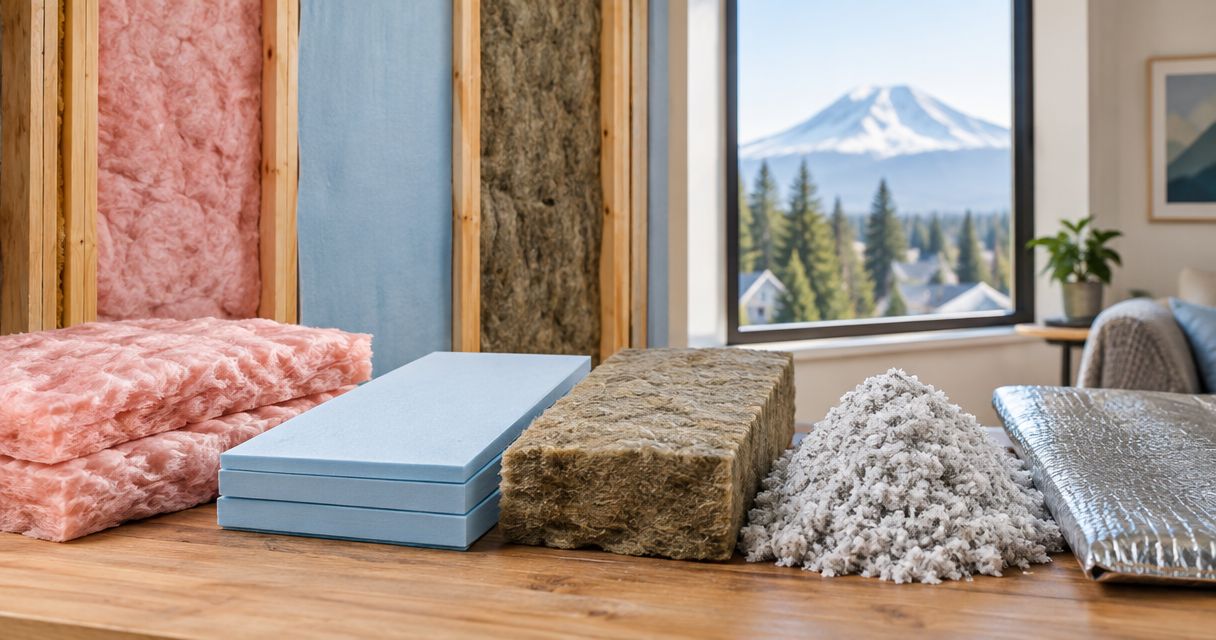
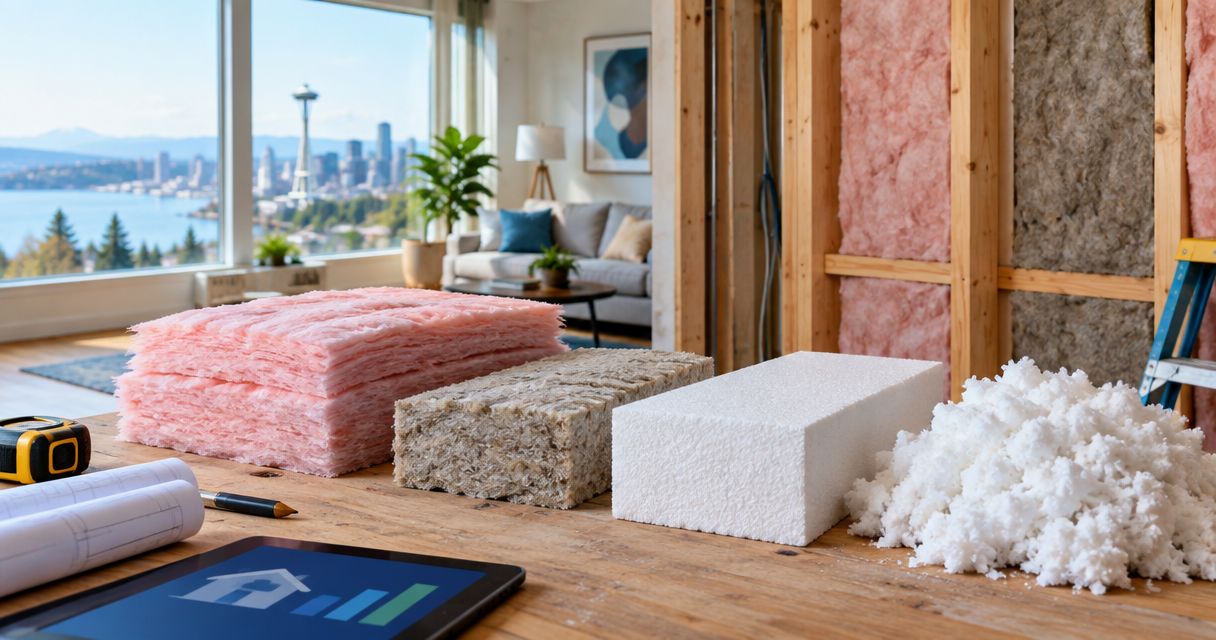
Fiberglass batts cost the least to install in a Seattle attic, but they lose R-value fast in a marine climate that never really dries out. Closed-cell spray foam costs the most per square inch and wins where moisture, air leaks, and structural rigidity all matter at once. This guide ranks six insulation options by relative cost so you can match the right material to the right part of the house before you call a contractor.
- Fiberglass batt insulation is the cheapest option for open, accessible attics in 2026 but underperforms in Seattle's damp climate.
- Closed-cell spray foam sits at the top of the insulation cost comparison seattle homeowners run, and it earns that cost in crawl spaces and rim joists.
- Open-cell spray foam is the mid-tier pick for soundproofing home offices and irregular wall cavities.
- Blown-in cellulose is the practical budget upgrade for older Seattle attics with uneven framing.
- Mineral wool and rigid foam board fill specific niches: fire-resistant garage walls and basement rim joists.
Why this matters
Seattle and the greater Pacific Northwest sit in a marine climate zone, which means insulation has to fight moisture as much as it fights heat loss. A lot of the housing stock in Seattle, Tacoma, and Olympia predates 1980, so crawl spaces and attics were built to code standards that look thin by 2026 expectations.
Cost comparisons that only look at price per square foot miss the bigger picture: an insulation material that traps moisture in a Seattle crawl space costs more in mold remediation than it ever saved on installation. Checking current numbers for spray foam insulation cost in Seattle before you commit to a cheaper batt product is worth the ten minutes.
What makes the best insulation option for a cost comparison
- R-value per inch — how much insulating power you get per dollar of material thickness
- Moisture and mold resistance — critical in Western Washington's wet winters
- Installed cost tier — material plus labor, not just the bag or roll price
- DIY versus professional install — batts save labor cost, spray foam does not
- Lifespan and settling — cellulose and batts compress and sag over years, foam does not
- Air sealing performance — gaps in batts and loose-fill undercut their rated R-value
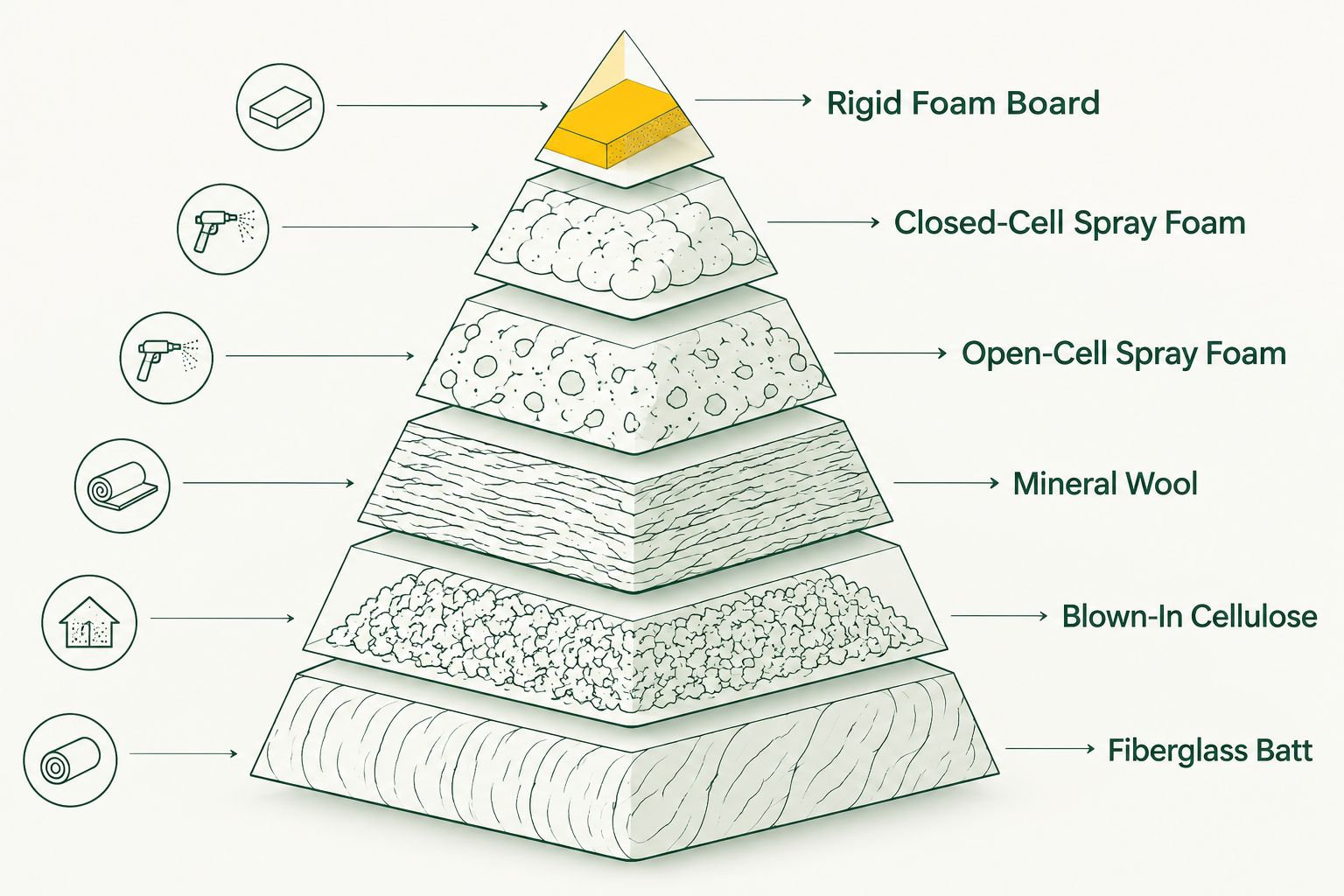
Insulation options at a glance
| Insulation Type | Best For | Standout Feature | Cost Tier | Key Limitation |
|---|---|---|---|---|
| Fiberglass Batt | Budget attic retrofits | Widely available, DIY-friendly | Lowest | Loses R-value with gaps and compression |
| Blown-In Cellulose | Older Seattle attics, irregular framing | Fills around obstructions and wiring | Low-to-moderate | Settles over time, absorbs moisture if wet |
| Mineral Wool | Fire-resistant garage conversions | Naturally fire- and pest-resistant | Moderate | Heavier and pricier per bag than fiberglass |
| Open-Cell Spray Foam | Soundproofing home offices and studios | Expands to seal irregular cavities, dampens sound | Moderate-to-high | Not a vapor barrier, professional install only |
| Closed-Cell Spray Foam | Crawl space moisture control | Acts as its own vapor barrier, adds rigidity | Highest | Highest upfront cost per board foot |
| Rigid Foam Board | Basement walls and rim joists | Continuous insulation, no thermal bridging | Moderate-to-high | Seams need sealing, awkward on odd angles |
1. Fiberglass Batt Insulation: best insulation for budget attic retrofits
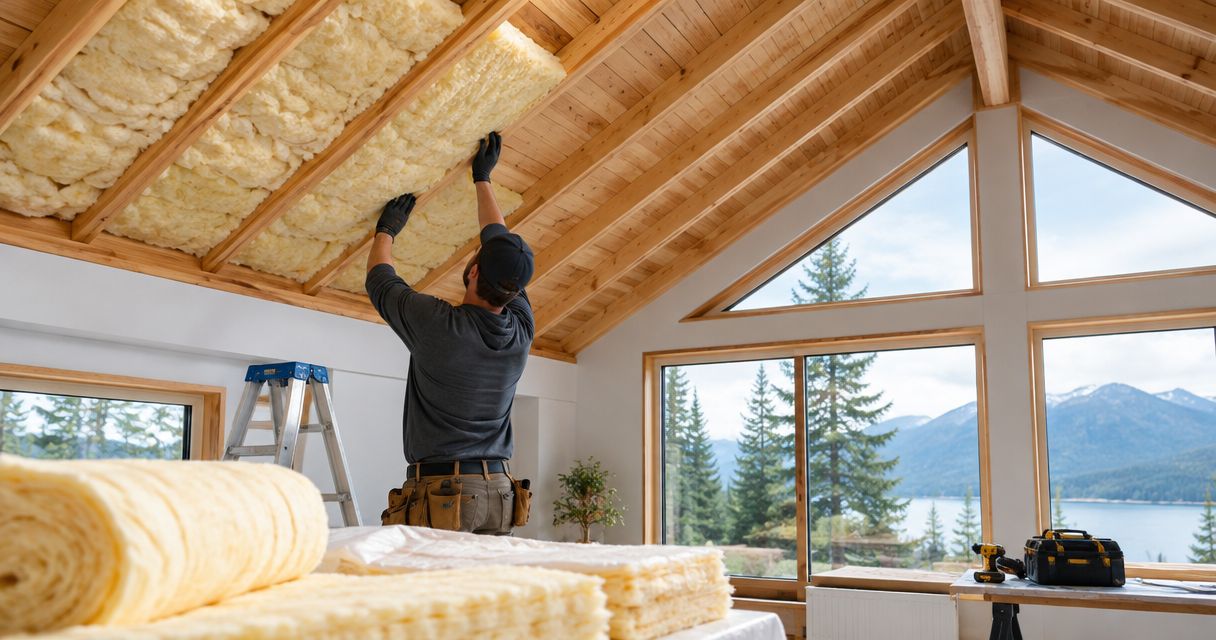
Fiberglass batts are pre-cut rolls of spun-glass fiber that fit between standard-spaced attic joists and wall studs. Any homeowner with a utility knife can install them, which is why they remain the default choice for cost-conscious attic jobs across Washington in 2026.
Fiberglass batt pros:
- Lowest material cost of any option on this list
- No cure time, no odor, ready to walk on the same day
- Simple to source at any home improvement store in Seattle or Tacoma
Fiberglass batt cons:
- Loses a meaningful chunk of its rated R-value when compressed or gapped around wiring and pipes
- Does nothing to stop air leakage on its own, so heat still escapes through gaps
- Fiberglass holds moisture rather than shedding it, a real liability in a wet crawl space
Best for: open, easy-to-access attics on a tight renovation budget. Verdict: Buy if the space is dry, accessible, and you're willing to pair it with separate air sealing.
2. Blown-In Cellulose: best insulation for retrofitting older Seattle attics
Cellulose is shredded, treated recycled paper blown into attics and wall cavities with a machine. It fills around obstructions, wiring, and irregular framing better than batts, which matters in the older housing stock common around Seattle and Olympia.
Blown-in cellulose pros:
- Fills gaps and odd angles that batts can't reach
- Made from recycled material, appealing for eco-conscious renovation projects
- Denser pack slightly slows air movement compared to loose fiberglass
Blown-in cellulose cons:
- Settles 15-20% over the years, thinning the insulation layer without a top-up
- Absorbs and holds water if a roof leak or attic condensation problem goes unnoticed
- Requires rental or contractor-grade blowing equipment, unlike batts
Best for: retrofitting attics in older Seattle and Tacoma homes with irregular joist spacing. Verdict: Buy for attic top-ups on a budget; Skip for damp or leak-prone spaces.
3. Mineral Wool (Rock Wool): best insulation for fire-resistant garage conversions
Mineral wool is spun from basalt rock and slag, formed into dense batts or loose fill. It resists fire and pests better than fiberglass or cellulose, which makes it a common pick for garage conversions turning into living space or workshops.
Mineral wool pros:
- Naturally fire-resistant without added chemical treatment
- Resists pests and mold better than fiberglass or cellulose
- Holds its shape and R-value longer than fiberglass batts
Mineral wool cons:
- Heavier to handle during install than fiberglass
- Costs more per bag or batt than standard fiberglass
- Still not a vapor barrier, so moisture management needs a separate plan
Best for: garage conversions and shared-wall spaces where fire code matters. Verdict: Buy for garage and workshop conversions; Hold for standard attic jobs where cost matters more.
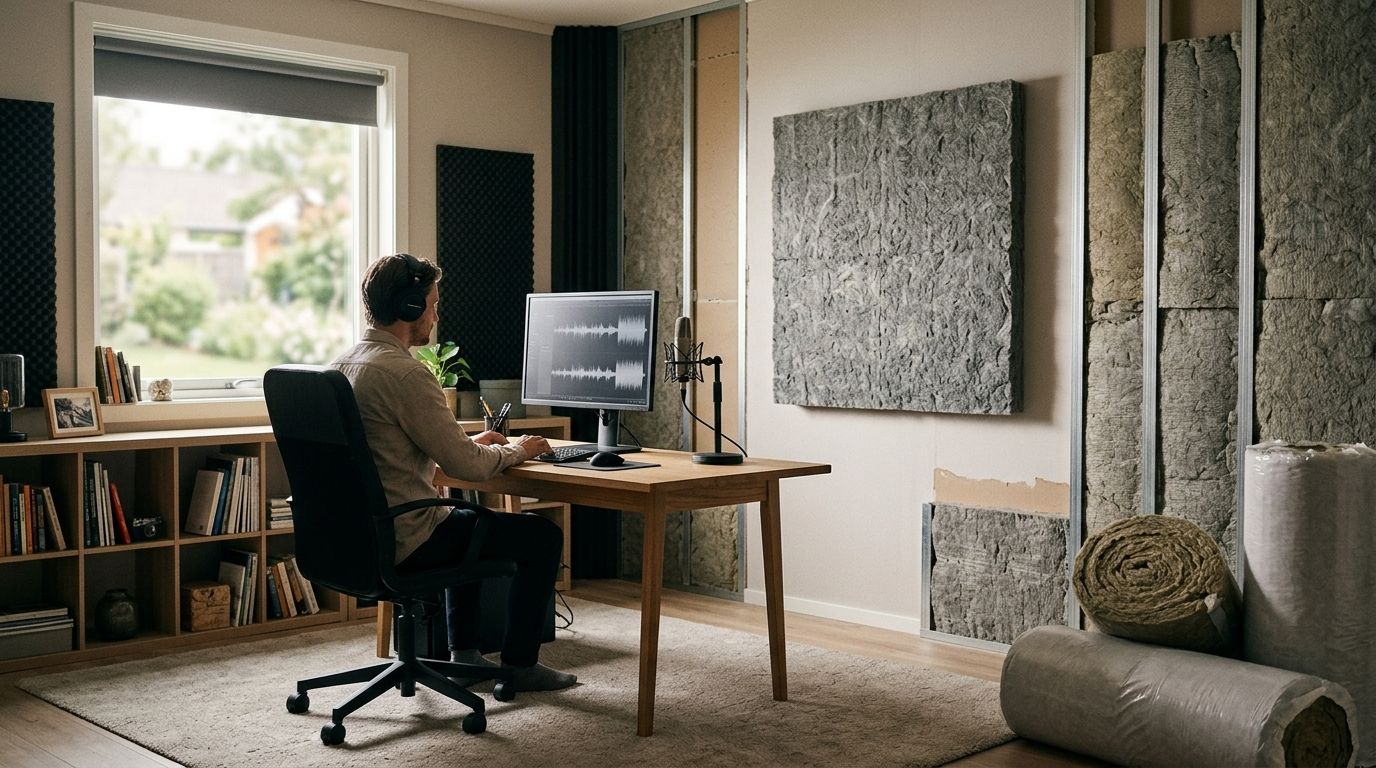
4. Open-Cell Spray Foam: best insulation for soundproofing home offices and studios
Open-cell spray foam expands to roughly 100 times its liquid volume, filling every gap and irregular cavity in a wall or ceiling. The soft, spongy cell structure absorbs sound far better than batts or loose fill, which is why home offices and studios in the Pacific Northwest increasingly spec it.
Open-cell spray foam pros:
- Seals air leaks and sound transmission in one application
- Expands into gaps around wiring, plumbing, and irregular framing that batts miss
- Lighter and less costly than closed-cell foam for wall and ceiling applications
Open-cell spray foam cons:
- Not a vapor barrier, so it needs a separate moisture strategy in wet areas
- Professional installation only; this isn't a weekend DIY project
- Lower R-value per inch than closed-cell foam, so thicker cavities are needed for the same performance
Best for: soundproofing home offices and studios and interior walls with irregular framing. Verdict: Buy for interior sound and air sealing; Hold for below-grade or high-moisture spaces.
5. Closed-Cell Spray Foam: best insulation for crawl space moisture control
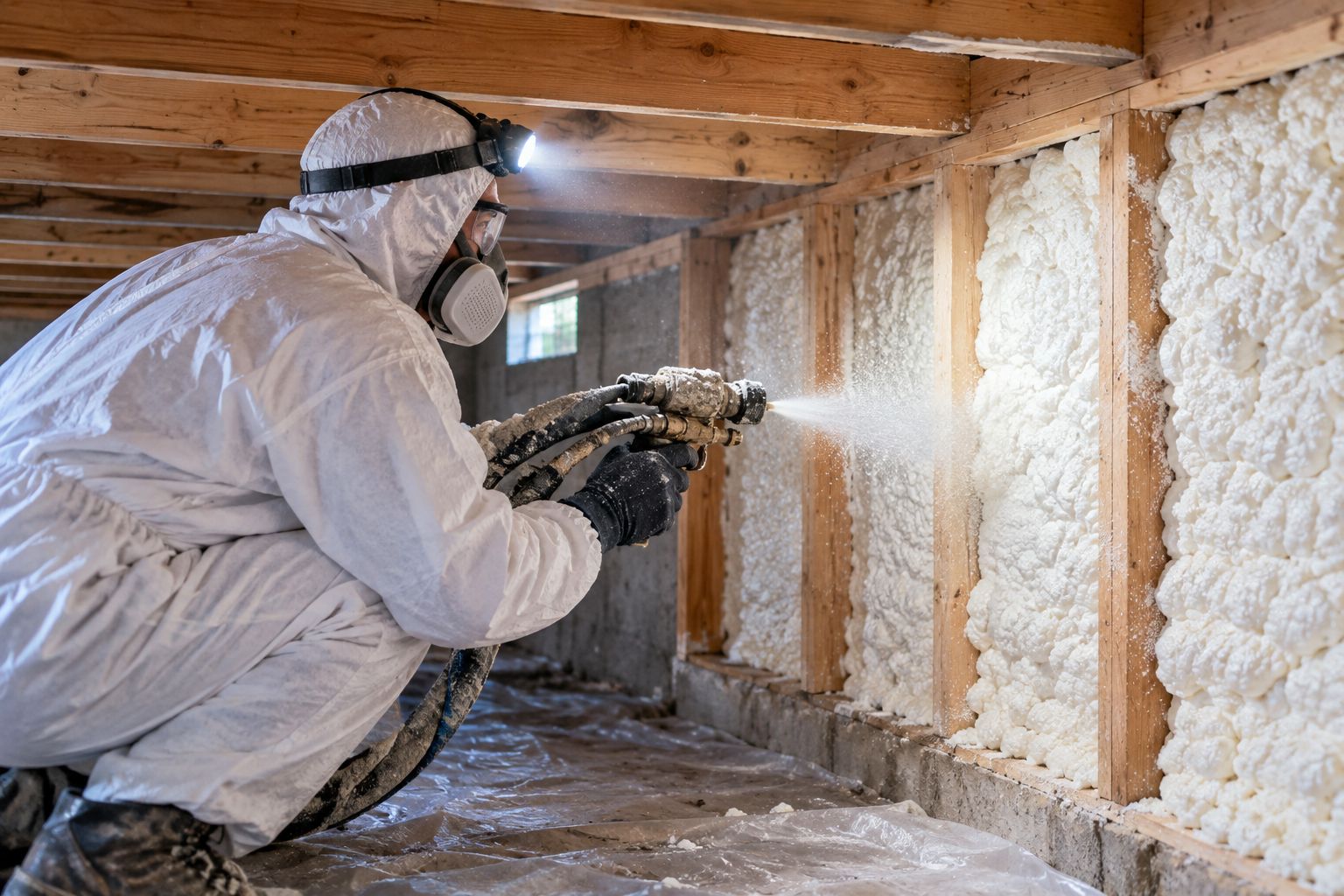
Closed-cell spray foam cures into a rigid, dense layer that acts as its own vapor barrier and adds real structural strength to rim joists and crawl space walls. It sits at the top of any insulation cost comparison Seattle homeowners run, and in crawl spaces and flood-prone areas the extra cost buys moisture protection nothing else on this list matches.
Closed-cell spray foam pros:
- Highest R-value per inch of any material on this list
- Doubles as a vapor barrier, critical for crawl space encapsulation work
- Adds rigidity and can strengthen rim joists and sill plates
Closed-cell spray foam cons:
- Highest cost per board foot of any option here
- Requires full professional installation and cure time before the space is usable
- Overkill for dry, easily accessible attic spaces where batts do the job
Best for: crawl spaces, rim joists, and flood-prone foundation walls. Verdict: Buy for moisture-critical spaces; Skip for simple attic top-ups where the budget doesn't support it.
6. Rigid Foam Board: best insulation for basement walls and rim joists
Rigid foam board comes in EPS, XPS, or polyiso panels that install as a continuous layer against basement walls or rim joists, cutting the thermal bridging that stud-cavity insulation can't avoid. It's a common upgrade in basement finishing projects across Washington in 2026.
Rigid foam board pros:
- Creates a continuous thermal layer with no stud gaps
- Resists moisture better than fiberglass or cellulose in below-grade applications
- Can be layered for higher total R-value on exterior walls
Rigid foam board cons:
- Seams need careful taping and sealing or performance drops fast
- Harder to fit around pipes, ducts, and irregular basement framing
- Cutting and fastening panels correctly takes more labor time than batts
Best for: basement wall insulation and rim joist retrofits. Verdict: Buy for basement finishing projects; Hold for attics where spray foam or batts install faster.
How we ranked these
Each material is ranked against the six criteria above: R-value per inch, moisture resistance, installed cost tier, install complexity, lifespan, and air sealing performance. Materials that only win on upfront cost but lose on moisture resistance or lifespan get flagged in the cons, not glossed over — a cheap batt job that needs redoing in ten years isn't actually the budget option.
Get a free insulation estimate
Compare spray foam, batt, and blown-in costs for your Seattle home.
Which insulation option should you choose?
For a dry, accessible attic on a tight budget, fiberglass batt insulation is the default buy in 2026. For a Seattle crawl space with any history of moisture, closed-cell spray foam is the material that stops the problem instead of managing it. For soundproofing a home office or filling irregular wall cavities, open-cell spray foam splits the difference between cost and performance. Match the material to the specific room, not the whole house to one product.
FAQ
What's the cheapest insulation option for a Seattle home in 2026?
Fiberglass batt insulation costs the least to install of the six options ranked here. It works best in dry, accessible attics; it underperforms in damp crawl spaces or areas with irregular framing.
Is closed-cell spray foam worth the extra cost in the Pacific Northwest?
Yes, in crawl spaces and rim joists where moisture is the real threat. Closed-cell spray foam acts as its own vapor barrier and reaches R-6 to R-7 per inch, the highest of any option in this comparison.
How does spray foam insulation cost compare to fiberglass batts in Seattle?
Spray foam sits higher on the cost tier than fiberglass batts because it requires professional installation and specialized equipment. Current project-specific numbers are on the spray foam cost page for Seattle.
What insulation works best for crawl space moisture in Western Washington?
Closed-cell spray foam handles crawl space moisture better than fiberglass, cellulose, or open-cell foam because it forms its own vapor barrier against damp foundation walls.
Does open-cell spray foam block sound better than fiberglass?
Yes, the spongy cell structure of open-cell spray foam absorbs sound more effectively than fiberglass batts, which is why it's the common pick for home offices and studios.
Is blown-in cellulose good for older Seattle homes?
Blown-in cellulose fits irregular framing and obstructions common in older Seattle and Tacoma attics better than pre-cut batts. It does settle over time and needs a top-up eventually.
What insulation lasts the longest in a Pacific Northwest attic?
Closed-cell and open-cell spray foam hold their shape and R-value longer than fiberglass or cellulose, which compress and settle over years.
Should I mix insulation types in the same house?
Yes, most Seattle homes benefit from mixing types: closed-cell foam in the crawl space, open-cell or batts in the attic, and rigid foam board on basement walls, matched to each area's moisture and access conditions.
One last thing
The insulation material matters less than where it's used badly: a fiberglass batt job in a dry, well-sealed attic will outperform a rushed spray foam job in a leaky one. Fix the moisture and air-sealing problem first, then pick the material tier that fits the budget for that specific space.