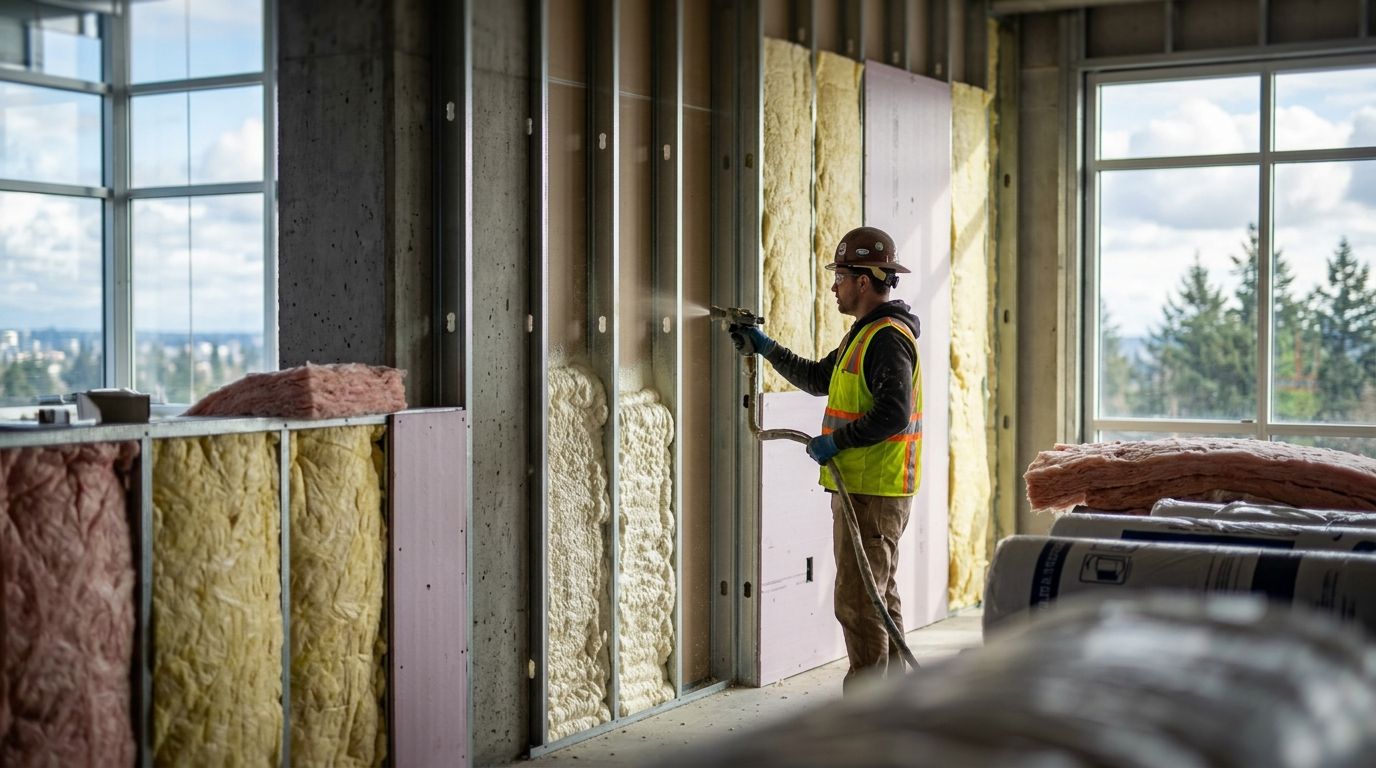
Older homes across Seattle, Tacoma, and Olympia were mostly framed before energy codes required real R-values, which means most of them are leaking heat through the attic, rim joists, and crawl space right now. Closed-cell spray foam is the best insulation for older Pacific Northwest homes overall, open-cell spray foam wins for interior walls and additions needing sound control, and blown-in cellulose is the best retrofit option when you can't open up finished walls. Fiberglass batts remain the budget pick for gutted stud bays, rigid foam board handles basement and crawl space walls, and mineral wool earns its spot in fire-conscious assemblies near wildfire-prone areas east of the Cascades.
- Closed-cell spray foam is the best insulation for older Pacific Northwest homes with leaky crawl spaces and rim joists in 2026.
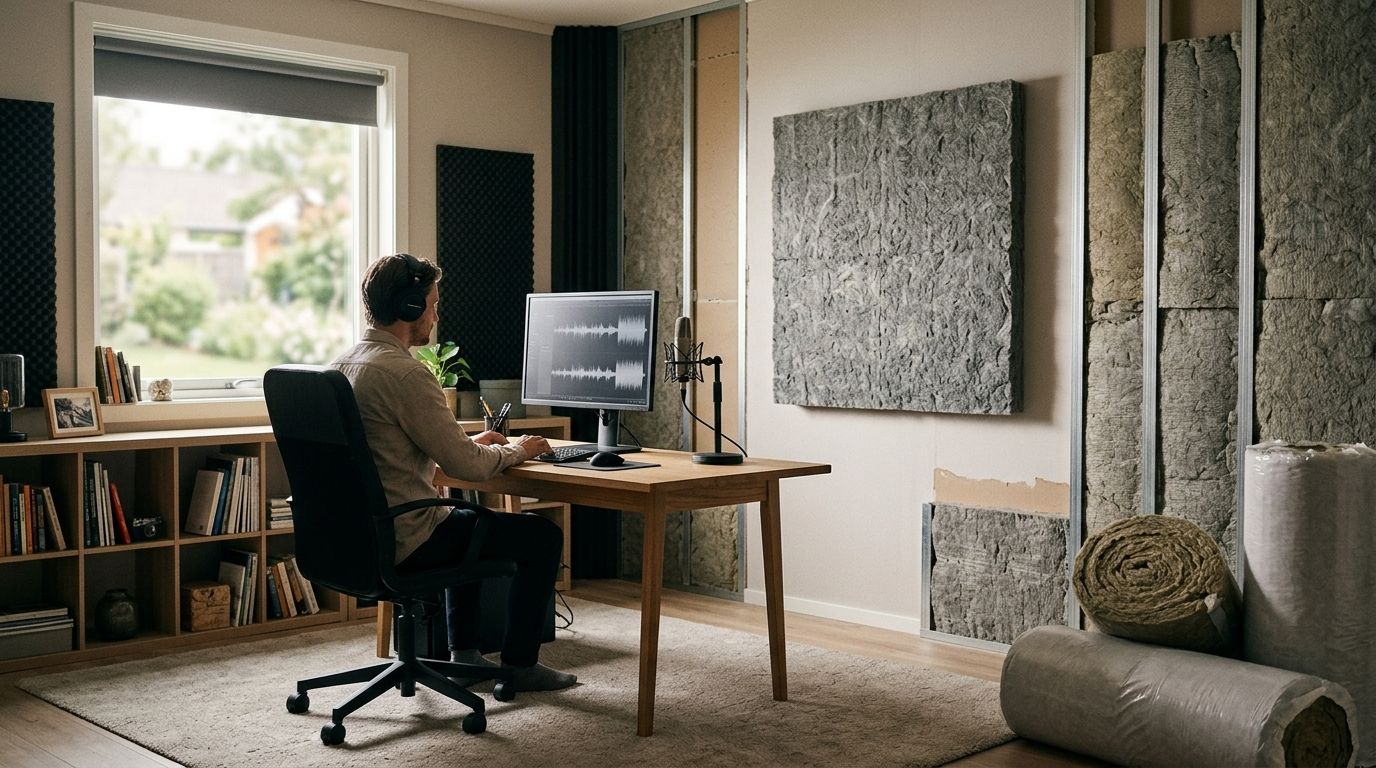
- Open-cell spray foam suits interior walls and attic conversions where sound dampening matters more than moisture control.
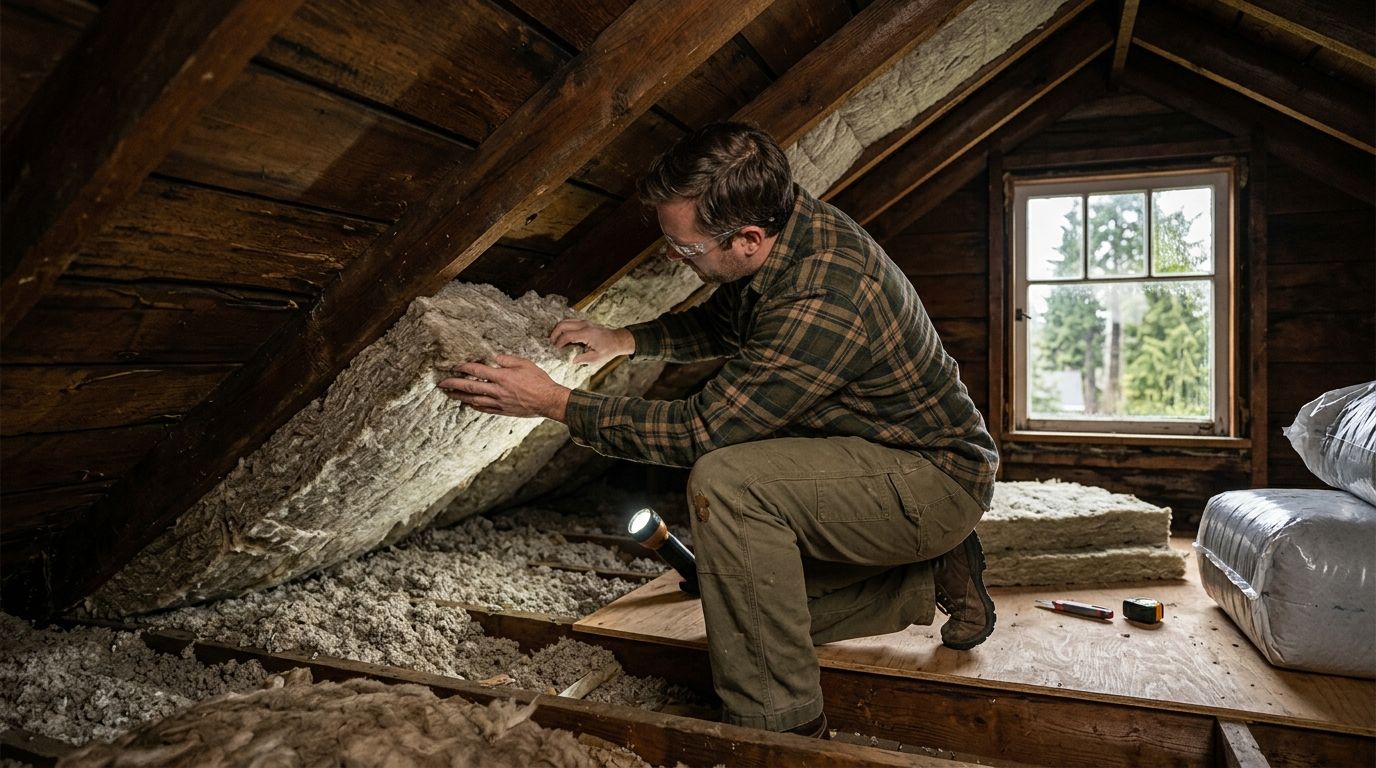
- Blown-in cellulose retrofits finished walls without demo, a common need in pre-1980s Seattle and Tacoma housing stock.
- Fiberglass batts stay the budget option only when stud bays are already open during a remodel.
- AT Foam installs both open-cell and closed-cell spray foam across Seattle, Tacoma, and Olympia.
Why this matters
Homes built before the 1990s in Washington's marine climate zone (4C) were typically insulated to R-11 walls and R-19 attics, if they were insulated at all. Current energy code recommendations for zone 4C call for R-49 to R-60 in attics and R-13 to R-21 in walls, so a lot of older housing stock is running at half the recommended level or less.
That gap shows up as ice damming on north-facing roofs, condensation in crawl spaces, and heating bills that spike every January. AT Foam works on this exact problem across Seattle, Tacoma, and Olympia, and the material choice matters more in a 1940s bungalow with balloon framing than it does in a house built to 2021 code. The wrong material in the wrong cavity traps moisture instead of blocking it, which rots framing faster than no insulation at all.
What makes the best insulation for older homes
- Moisture management — older PNW crawl spaces and rim joists see constant humidity; the material has to resist or block it, not hold it
- Air sealing performance — old homes leak through top plates, wiring penetrations, and balloon-framed wall cavities; batts don't seal, foam does
- R-value per inch — cramped older joist bays and 2x4 walls need density, not just volume
- Compatibility with existing framing — knob-and-tube wiring, uneven stud spacing, and non-standard cavity depths rule out some products
- Installation disruption — whether the material requires opening finished walls or can be blown/sprayed through small access points
- Longevity without settling — batts sag over decades in older wall cavities; foam and dense-pack cellulose don't
Insulation types at a glance
| Material | Best for | Standout feature | Key limitation |
|---|---|---|---|
| Closed-cell spray foam | Crawl spaces and rim joists | Vapor barrier + air seal in one pass | Higher material cost per board foot |
| Open-cell spray foam | Interior walls and additions | Sound dampening between rooms | Not a vapor barrier on its own |
| Blown-in cellulose | Retrofitting finished walls | Small access holes, no demo | Settles over time in open cavities |
| Rigid foam board | Basement and crawl space walls | High R-value in thin profile | Requires seam sealing to perform |
| Fiberglass batts | Open stud bays during remodels | Lowest material cost | No air sealing, prone to gaps |
| Mineral wool | Fire-rated assemblies | Non-combustible, water-resistant | Heavier and pricier than batts |
1. Closed-cell spray foam: best insulation for crawl spaces and rim joists
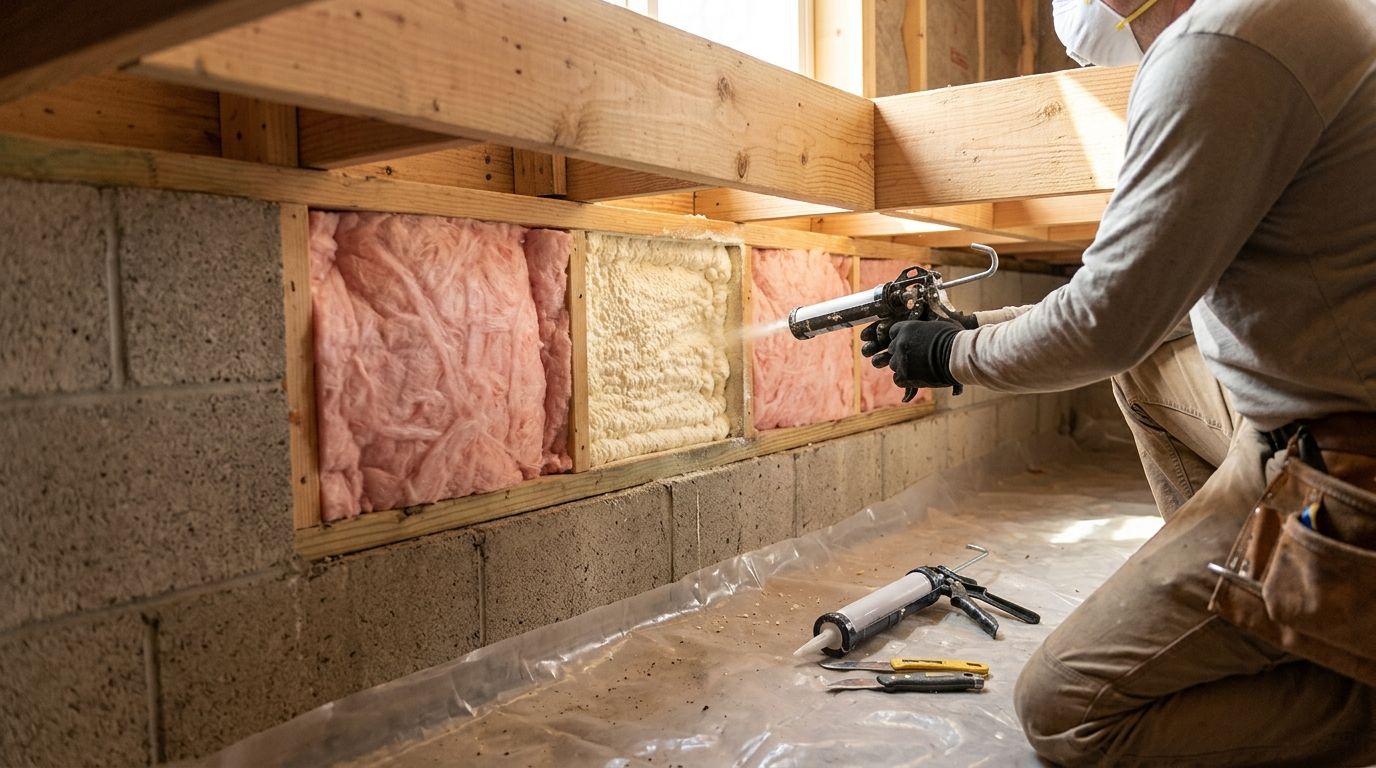
Closed-cell spray foam expands to roughly R-6.5 per inch and cures into a rigid, water-resistant layer that doubles as an air seal. In older Pacific Northwest crawl spaces — where ground moisture and vented framing are constant issues — it stops both the air leaks and the vapor drive that batts can't touch.
Closed-cell spray foam pros:
- Acts as an air barrier and vapor barrier in a single application
- Adds structural rigidity to rim joists and sill plates
- Performs in tight, irregular cavities common in pre-1960s framing
Closed-cell spray foam cons:
- Costs more per board foot than open-cell or batts
- Requires a trained crew for consistent thickness and cure
Best for: crawl spaces, rim joists, and any cavity where moisture is the primary threat. Verdict: Buy for crawl space and rim joist work in 2026 — this is the category AT Foam gets called out for most often in Seattle and Tacoma jobs.
2. Open-cell spray foam: best insulation for interior walls and additions
Open-cell spray foam runs about R-3.6 per inch, softer and more flexible than closed-cell, which makes it a strong fit for interior partition walls where sound control matters as much as thermal performance. It's also common in attic conversions on older additions where the roof deck needs a continuous air seal.
Open-cell spray foam pros:
- Fills irregular stud bays completely, no gaps or voids
- Noticeably reduces sound transfer between rooms
- Lower material cost than closed-cell foam
Open-cell spray foam cons:
- Not a vapor barrier, so it needs a separate strategy in high-moisture zones
- Expands more, requiring careful trimming around wiring and framing
Best for: interior walls, attic roof decks, and additions on older homes. Verdict: Buy when the goal is sound control or attic conversion rather than moisture-heavy crawl space work.
3. Blown-in cellulose: best insulation for retrofitting finished walls
Cellulose, made from recycled paper treated with fire retardant, gets dense-packed through small drilled holes, which makes it the practical choice when a homeowner doesn't want drywall torn out. R-value lands around R-3.2 to R-3.8 per inch depending on installed density.
Blown-in cellulose pros:
- Installs through small access points, no wall demolition
- Dense-pack installation resists air movement better than loose fiberglass
- Made from recycled material, a selling point for eco-conscious homeowners
Blown-in cellulose cons:
- Can settle over decades if not packed to the right density initially
- Absorbs moisture if a bulk water leak goes undetected
Best for: finished 1920s-1960s walls where opening drywall isn't an option. Verdict: Hold as a solid retrofit choice, but only with a contractor who dense-packs correctly.
4. Rigid foam board: best insulation for basement and crawl space walls
Extruded polystyrene (XPS) rigid board delivers around R-5 per inch in a thin, water-resistant panel, making it a common choice for basement and crawl space wall upgrades where floor space is tight and moisture resistance matters.
Rigid foam board pros:
- High R-value per inch of thickness
- Resists moisture better than batts or cellulose
- Works well against foundation walls without cavity depth
Rigid foam board cons:
- Seams need taping or foam sealing or the air-seal benefit disappears
- Doesn't conform to irregular surfaces the way spray foam does
Best for: basement walls and crawl space perimeter walls in older foundations. Verdict: Buy for foundation wall retrofits specifically.
5. Fiberglass batts: best budget insulation for open stud bays
Fiberglass batts run roughly R-3.1 to R-3.4 per inch and remain the cheapest material on this list. They only make sense in older homes when a remodel has already opened the stud bays, since batts alone don't air seal.
Fiberglass batts pros:
- Lowest material cost of any option here
- Widely available and easy to source for DIY-adjacent remodels
- No off-gassing curing period like spray foam
Fiberglass batts cons:
- No air sealing on their own, which is the biggest energy loss point in older homes
- Settles and gaps around wiring, plumbing, and irregular framing common in older houses
- Ineffective at stopping crawl space moisture
Best for: open stud bays during a full remodel on a tight budget. Verdict: Wait unless the walls are already open and the budget is fixed.
6. Mineral wool: best insulation for fire-rated assemblies
Mineral wool (rock wool) delivers around R-3.0 to R-3.3 per inch and is non-combustible, which makes it relevant for homes in wildfire-adjacent areas of eastern Washington and the Cascade foothills, or for fire-rated wall assemblies between a house and an attached garage.
Mineral wool pros:
- Non-combustible, holds up in fire-rated assembly requirements
- Resists water better than fiberglass
- Doesn't support mold growth as readily as cellulose
Mineral wool cons:
- Heavier and more expensive than fiberglass batts
- Still doesn't air seal on its own
Best for: garage-to-house fire walls and wildfire-zone construction. Verdict: Hold as a specialty pick, not a default for typical Seattle or Tacoma retrofits.
Get a free insulation quote
AT Foam evaluates your attic, crawl space, or walls before recommending a material.
How we ranked
Each material was scored against the six criteria above, weighted toward moisture management and air sealing since those two factors drive the most damage in Pacific Northwest housing stock built before 1990. Materials that only add R-value without addressing air leaks or moisture ranked lower even when they cost less.
Which insulation should you choose?
For most older homes in Seattle, Tacoma, and Olympia, closed-cell spray foam in crawl spaces and rim joists paired with open-cell spray foam in interior walls and attic conversions covers the two biggest failure points at once. If your walls are already finished and demo isn't on the table, blown-in cellulose is the honest second choice for 2026. Skip fiberglass batts unless the walls are already open and the budget is the deciding factor.
FAQ
What is the best insulation for older homes in the Pacific Northwest?
Closed-cell spray foam is the best insulation for older Pacific Northwest homes because it air seals and moisture-proofs crawl spaces and rim joists in one step. Open-cell spray foam is the better choice for interior walls and attic conversions where sound control matters more.
Is spray foam better than fiberglass for a 1950s house?
Yes, spray foam outperforms fiberglass in a 1950s house because it air seals the irregular cavities common in that era's framing. Fiberglass batts alone leave gaps around wiring and plumbing that keep energy loss high.
Can you add insulation to an old house without removing drywall?
Blown-in cellulose is installed through small drilled access holes, so finished walls stay intact. It's the standard retrofit choice for pre-1970s homes where demo isn't practical.
How much R-value do older Pacific Northwest homes need in 2026?
Current energy code guidance for climate zone 4C, which covers Seattle, Tacoma, and Olympia, targets R-49 to R-60 in attics and R-13 to R-21 in walls. Most homes built before the 1990s fall well short of that.
Does closed-cell spray foam work in a crawl space?
Yes, closed-cell spray foam is the top choice for crawl spaces because it resists ground moisture and seals air leaks at the rim joist. Open-cell foam is not recommended there since it isn't a vapor barrier.
Is mineral wool worth it for a standard remodel?
Mineral wool only makes sense for fire-rated assemblies or wildfire-prone areas; it costs more than fiberglass without adding air-sealing performance. For a standard Seattle or Tacoma remodel, spray foam or cellulose is the better return.
How long does spray foam insulation last?
Closed-cell and open-cell spray foam don't settle or sag the way batts and loose-fill can over decades. Properly cured foam holds its R-value for the life of the building envelope it's installed in.
One last thing
The detail most homeowners miss: insulation material only fixes half the problem in a pre-1980s Pacific Northwest home. If the crawl space vents are still open and unsealed, even the best closed-cell spray foam job won't stop the humidity driving mold growth on the joists above it — the vents need to be closed or the encapsulation redone alongside the insulation work, not after it.
AT Foam evaluates the whole envelope — attic, walls, and crawl space — before recommending a single material, which is the only way to actually fix an older home's energy loss instead of patching one symptom.