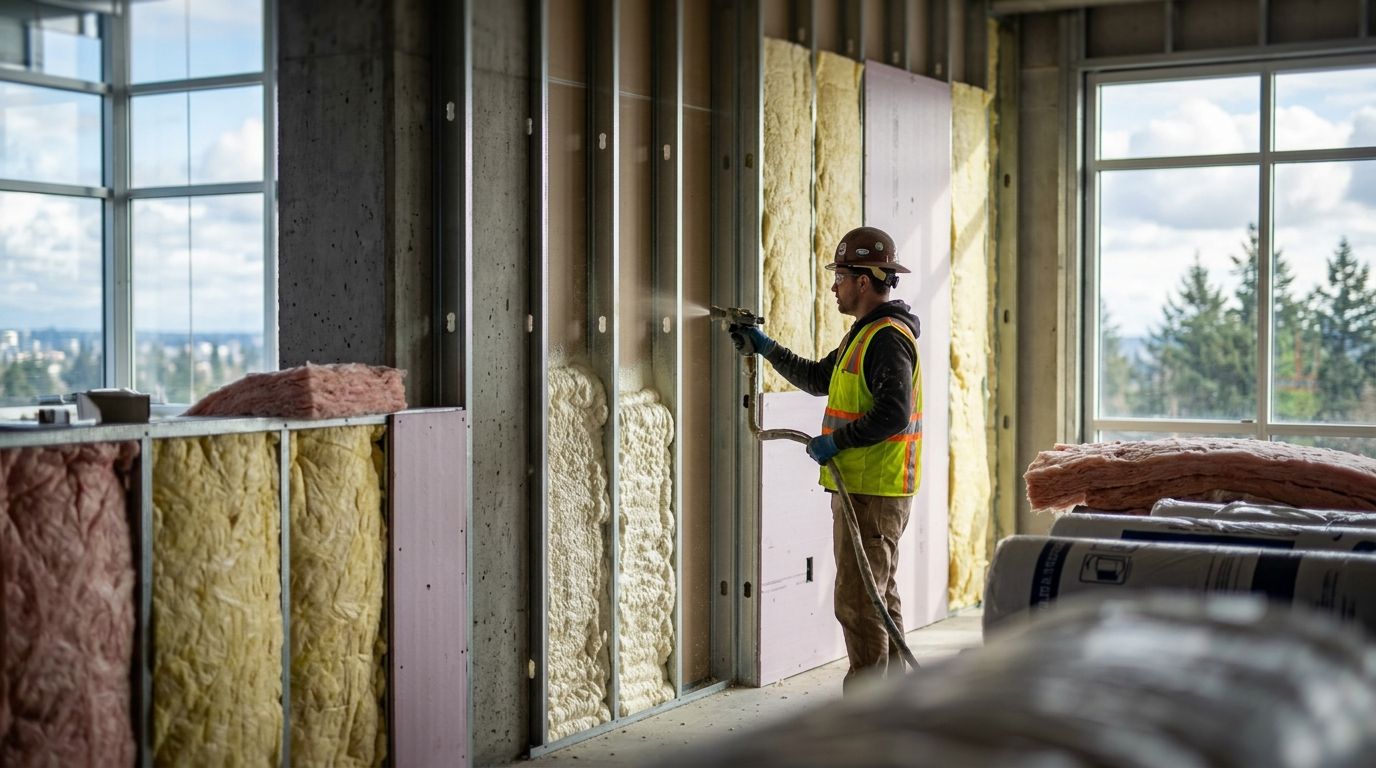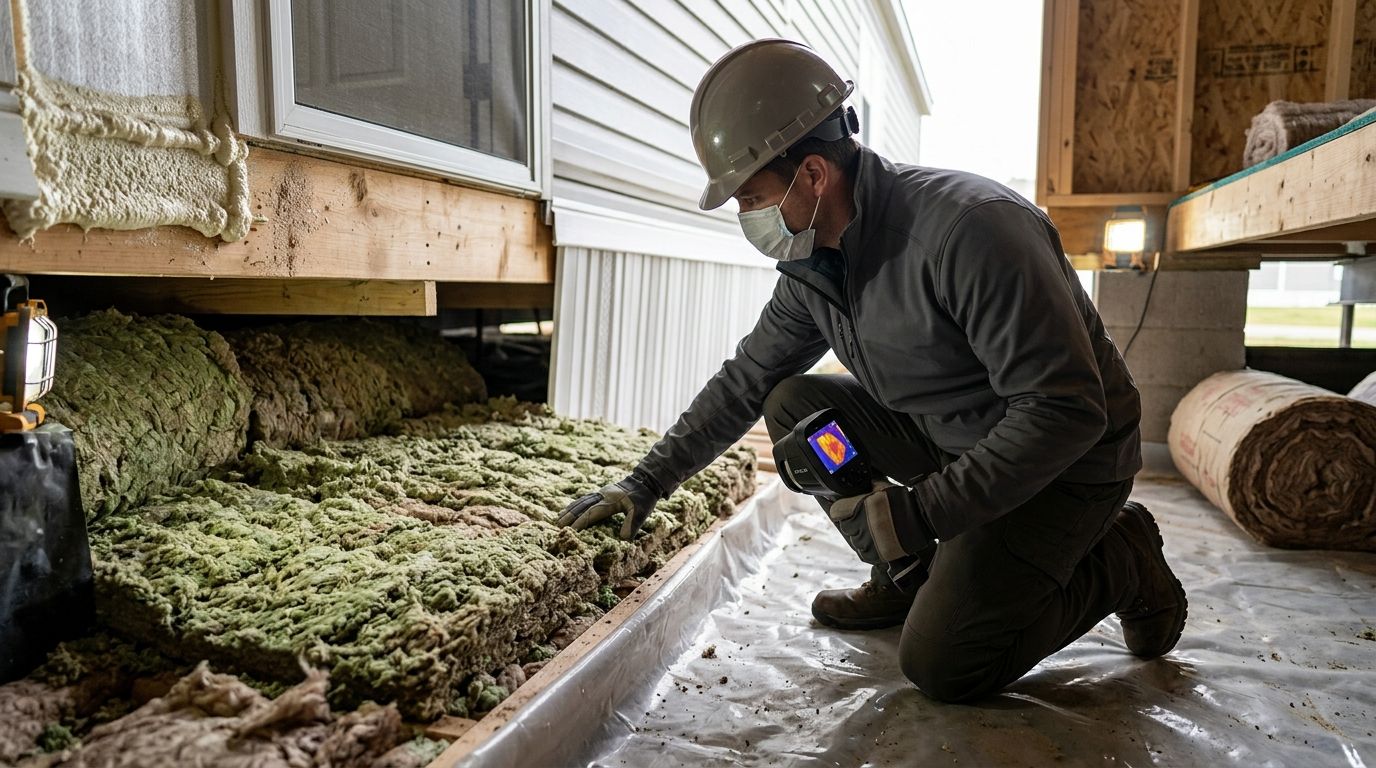
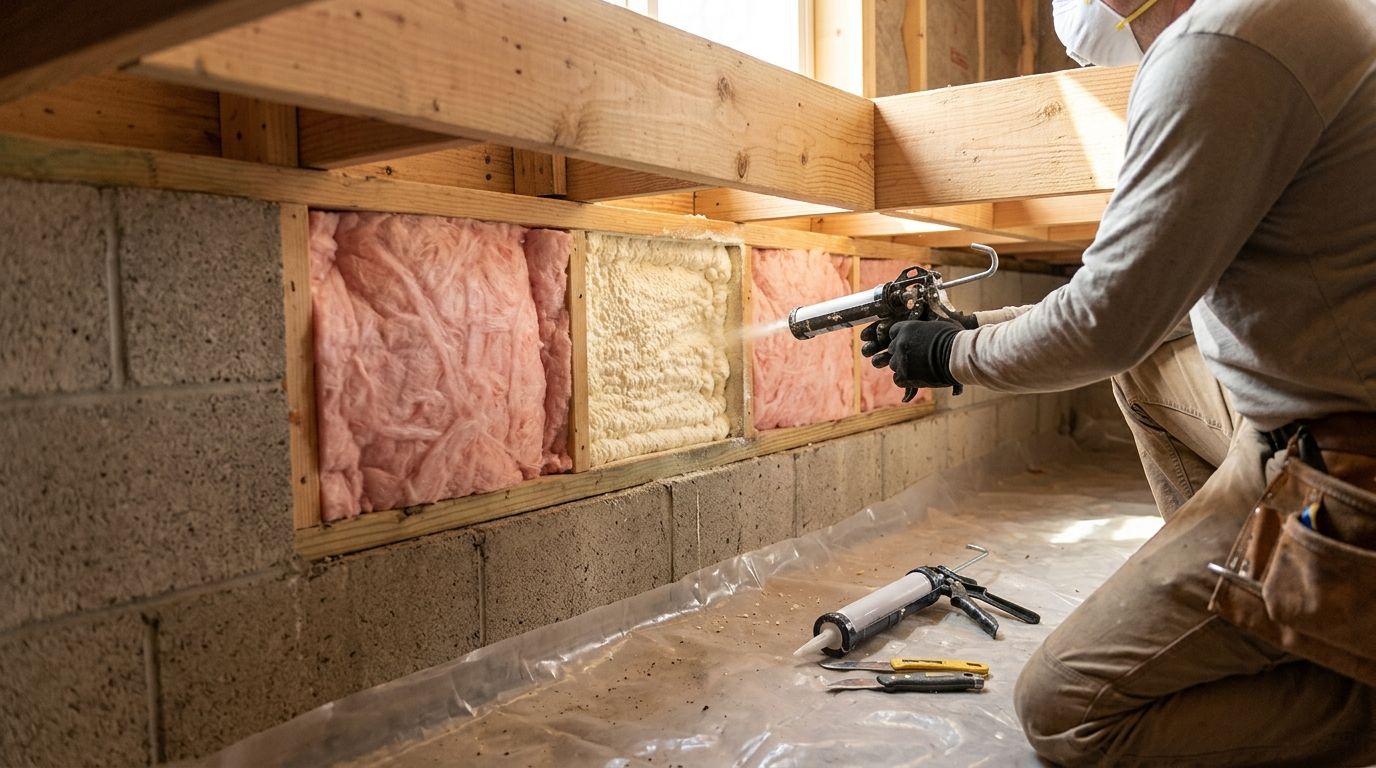
Rim joists are the single leakiest spot in most Pacific Northwest crawl spaces, and picking the wrong material there wastes money on heating bills every winter. Closed-cell spray foam is the best insulation for rim joists in crawl spaces for most Washington homes because it air-seals and insulates in one step and resists the moisture that wrecks fiberglass; rigid foam board is the better call for a tight DIY budget, and fiberglass batts should be your last option in a vented or damp crawl space.
- Closed-cell spray foam wins for rim joists in Pacific Northwest crawl spaces — R-6.5 to R-7 per inch plus an air seal in one pass.
- Rigid foam board (XPS) is the best DIY option for homeowners insulating rim joists themselves in 2026.
- Fiberglass batts trap moisture against rim joists and are the weakest choice for Washington's humid crawl spaces.
- Open-cell spray foam works only in dry, conditioned crawl spaces — skip it if the space vents to outside air.
- Pair rim joist spray foam with full crawl space encapsulation if mold or standing moisture is already a problem.
Why this matters
Rim joists sit where the foundation wall meets the floor framing, and in most homes across Seattle, Tacoma, and Olympia that band is a bare wood strip with a stud bay behind it, wide open to outside temperatures. Air leaks through the sill plate and joist bay faster than through almost any other part of the crawl space envelope.
Get this wrong and the mistake compounds. Fiberglass batts stuffed into a rim joist bay in a humid Pacific Northwest crawl space trap condensation against cold wood, and that moisture feeds rot and mold within a season or two. AT Foam Insulation sees this pattern constantly in older homes around the Sound — batts pulled out damp, joists showing early decay, and a musty smell that traces straight back to a rim joist nobody air-sealed properly.
What makes the best insulation for rim joists:
- Air-sealing performance — rim joists leak air more than they lose conductive heat, so a material that seals gaps beats one that just fills space
- Moisture resistance — vapor-open materials in a damp crawl space invite condensation; closed-cell foam and foil-faced rigid board shed water vapor instead of absorbing it
- R-value per inch — tight joist bays mean thickness is limited, so R-value density matters more than in open wall cavities
- Code compliance — most jurisdictions require a thermal or ignition barrier over exposed spray foam in conditioned crawl spaces, which changes install cost and labor
- Durability in cyclical temperatures — rim joists swing through wider daily temperature ranges than any other framing member, and cheap materials degrade faster there
- Compatibility with encapsulation — if the crawl space is already sealed or is getting sealed, the rim joist material needs to match that vapor strategy
At a glance
| Insulation Type | Best For | Standout Feature | Key Limitation |
|---|---|---|---|
| Closed-cell spray foam | Most PNW crawl spaces, moisture-prone sites | Air seal + vapor barrier in one application | Requires professional installation |
| Rigid foam board (XPS) | DIY budget projects | Cuttable, stable R-5 per inch, no cure time | Seams need manual sealing with tape or foam |
| Open-cell spray foam | Dry, fully conditioned crawl spaces | Expands to fill irregular joist bays completely | Vapor-open — wrong choice for damp sites |
| Fiberglass batts | Temporary or code-minimum fixes only | Lowest material cost, no special tools | Absorbs moisture, sags, poor air seal |
| Spray foam + encapsulation | Chronic moisture or existing mold | Treats the whole crawl space system, not just the rim | Highest total project scope |
1. Closed-cell spray foam: best insulation for rim joists in Pacific Northwest crawl spaces
Closed-cell spray foam is applied directly to the rim joist and sill plate as a liquid that expands and cures into a rigid, air-tight layer. It runs R-6.5 to R-7 per inch, so 2 inches in a standard rim joist bay clears most Washington energy code minimums for that assembly while sealing every gap around wiring and plumbing penetrations.
Closed-cell spray foam pros:
- Air-seals and insulates in a single application, no separate caulk or tape step
- Closed cell structure blocks vapor drive, which matters in vented or semi-vented crawl spaces
- Adds structural rigidity to the rim joist assembly
- Holds R-value for the life of the building — it doesn't sag or settle
Closed-cell spray foam cons:
- Costs more per square foot than batts or board
- Needs a licensed applicator for proper mix ratio and cure
- Codes may require an ignition barrier over exposed foam in accessible crawl spaces
Closed-cell spray foam pricing: varies by crawl space size and access — check current cost ranges for spray foam projects in the Seattle area before budgeting.
Best for: homeowners in Seattle, Tacoma, or Olympia dealing with a vented crawl space, existing moisture history, or an older home with irregular rim joist framing. Verdict: Buy.
2. Rigid foam board (XPS/polyiso): best insulation for rim joists on a DIY budget
Rigid foam board gets cut to fit each rim joist bay and sealed at the perimeter with canned spray foam or foil tape. XPS runs about R-5 per inch and holds up to moisture far better than fiberglass, which is why it's the standard DIY recommendation for rim joists in building science circles.
Rigid foam board pros:
- Homeowner can install it with basic tools over a weekend
- Doesn't absorb water like fiberglass, so it survives incidental crawl space dampness
- No cure time, no fumes, no licensed contractor required
- Cuttable to exact joist bay dimensions for a tight fit
Rigid foam board cons:
- Seams and edges need manual sealing — skip that step and you lose most of the air-sealing benefit
- Lower R-value per inch than closed-cell spray foam in the same bay depth
- Doesn't conform to irregular framing or penetrations the way spray foam does
Best for: homeowners handling insulation themselves who have a dry crawl space and standard, square rim joist bays. Verdict: Buy for DIY projects, Hold for irregular framing.
3. Open-cell spray foam: best insulation for rim joists in dry, conditioned crawl spaces
Open-cell foam expands more than closed-cell and fills irregular cavities completely, but it runs a lower R-3.5 to R-3.7 per inch and stays vapor-open. That vapor permeability is fine in a fully conditioned, sealed crawl space with no outside air infiltration — it's a liability anywhere moisture can reach the foam from outside.
Open-cell spray foam pros:
- Expands to fill gaps and irregular framing more completely than rigid board
- Lower material cost than closed-cell foam
- Good sound-dampening properties if the crawl space sits below a living area
Open-cell spray foam cons:
- Vapor-open structure absorbs and holds moisture in a humid or vented crawl space
- Lower R-value per inch means thicker application needed to hit the same target
- Not recommended for crawl spaces with any history of standing water or high humidity
Best for: conditioned, fully encapsulated crawl spaces in newer construction with no vent openings. Verdict: Hold — confirm the crawl space is sealed and conditioned before choosing this over closed-cell.
4. Fiberglass batts: the weakest insulation for rim joists in Washington's climate
Fiberglass batts are the cheapest option and the one most rim joists in older Pacific Northwest homes already have stuffed into them. The problem is physical: batts don't seal air leaks, and once humid crawl space air reaches the cold rim joist surface, the fiberglass holds that moisture against the wood instead of letting it dry.
Fiberglass batt pros:
- Lowest material cost of any option on this list
- No tools or curing time required
- Widely available at any hardware store
Fiberglass batt cons:
- Provides no air seal — heat loss continues around and through the batt
- Absorbs moisture and stays wet in vented or humid crawl spaces
- Sags and loses R-value within a few years in a rim joist application
- Common driver of the mold and rot AT Foam finds during crawl space inspections
Best for: nothing durable — fine only as a stopgap before a proper fix. Verdict: Skip.
5. Spray foam plus crawl space encapsulation: best for chronic moisture or existing mold
When a crawl space already shows standing water, high humidity, or visible mold, insulating the rim joist alone doesn't fix the underlying problem. Pairing closed-cell spray foam on the rim joists with a full vapor barrier and sealed crawl space treats the whole system instead of one framing member.
Spray foam + encapsulation pros:
- Addresses moisture source, not just the symptom at the rim joist
- Protects the rim joist investment from future water damage
- Improves indoor air quality throughout the home, not just crawl space temperature
Spray foam + encapsulation cons:
- Larger project scope and higher total cost than rim joist work alone
- Requires coordinating vapor barrier installation with the spray foam schedule
Crawl space encapsulation paired with spray foam is the right call for any Washington home where moisture has already caused visible damage — see the dedicated guide on insulation choices for crawl space moisture and mold prevention for the full picture.
Best for: older PNW homes with a documented moisture or mold history in the crawl space. Verdict: Buy if moisture is already present; otherwise start with rim joist spray foam alone.
Get a Rim Joist Insulation Quote
Veteran-owned crews serving Seattle, Tacoma, and Olympia — free on-site estimate.
How we ranked these
Each material is judged against the six criteria above, weighted toward air-sealing and moisture resistance since those two factors decide whether rim joist insulation lasts 5 years or 25 in a Pacific Northwest climate. R-value per inch matters, but only after a material proves it won't hold water against the wood it's protecting.
Closed-cell spray foam earns the top spot because it's the only material on this list that solves air-sealing and moisture resistance at the same time.
Which rim joist insulation should you choose?
Default to closed-cell spray foam if the crawl space vents to outside air, has any history of dampness, or sits in an older home anywhere near Puget Sound. Choose rigid foam board only if you're doing the work yourself in a dry, well-framed crawl space and will seal every seam. Treat fiberglass batts as a last resort, and if mold or standing water is already visible, start with a full crawl space encapsulation plan before touching the rim joist at all.
FAQ
What's the best insulation for rim joists in a crawl space?
Closed-cell spray foam is the best insulation for rim joists in most Pacific Northwest crawl spaces because it air-seals and insulates in one step at R-6.5 to R-7 per inch. Rigid foam board is the next best option for DIY budgets.
Is closed-cell spray foam better than fiberglass for rim joists?
Yes, closed-cell spray foam beats fiberglass for rim joists because it blocks air leaks and resists moisture, while fiberglass absorbs humidity and provides no air seal. Fiberglass batts are the weakest option on any rim joist in a vented Washington crawl space.
Do I need a vapor barrier with rim joist spray foam?
Closed-cell spray foam already acts as its own vapor barrier, so a separate membrane isn't needed on the rim joist itself. If the crawl space floor is dirt, a ground vapor barrier is still required as part of full encapsulation.
Is open-cell spray foam OK for crawl space rim joists?
Open-cell spray foam only works well on rim joists in a fully conditioned, sealed crawl space with no outside air infiltration. In a vented or humid crawl space, its vapor-open structure absorbs moisture and closed-cell foam is the safer choice.
What R-value do I need for rim joists in Washington State?
Most Washington energy code requirements for rim joist assemblies are met with 2 inches of closed-cell spray foam at R-6.5 to R-7 per inch. Exact requirements depend on the local jurisdiction and whether the crawl space is vented or conditioned.
Can I insulate rim joists myself with rigid foam board?
Yes, rigid foam board is the standard DIY option for rim joists — cut panels to fit each bay and seal every seam with foil tape or canned spray foam. Skipping the seam sealing step cancels out most of the air-sealing benefit.
Does spray foam rim joist insulation stop mold?
Spray foam on the rim joist reduces the moisture and air leakage that feeds mold, but it won't fix an existing mold problem caused by standing water or ground moisture elsewhere in the crawl space. Chronic moisture issues need full crawl space encapsulation alongside the rim joist work.
How much does spray foam insulation cost for rim joists in 2026?
Rim joist spray foam projects are usually priced as part of a broader crawl space insulation job rather than a standalone line item. Get a current quote based on square footage and crawl space access before budgeting.
One last thing
Most homeowners insulate the rim joist and stop, but the sill plate directly above it — the wood strip the joist sits on — leaks nearly as much air and almost never gets sealed in a standard fiberglass retrofit. Ask whoever quotes the job whether the sill plate gets foam coverage too; if the quote only mentions the joist bay, you're paying for half the fix.