Crawl space moisture and mold prevention comes down to one choice: which insulation actually blocks vapor instead of absorbing it. Closed-cell spray foam wins for crawl space moisture and mold prevention in 2026 because it doubles as an air seal and a vapor retarder in one application, while open-cell spray foam, rigid foam board, and fiberglass batts each solve a narrower version of the problem. AT Foam installs closed-cell spray foam in crawl spaces across Seattle, Tacoma, and Olympia, where damp soil and vented crawl spaces make mold a year-round risk, not a seasonal one.
- Closed-cell spray foam is the best overall crawl space moisture prevention insulation for 2026 — it seals air leaks and blocks vapor in one step.
- Open-cell spray foam works for semi-conditioned crawl spaces but needs a vapor retarder facing to meet Washington building code.
- Rigid foam board suits DIY-friendly wall insulation jobs where a contractor crew isn't required.
- Fiberglass batts are the cheapest option but absorb moisture and are the most common cause of crawl space mold call-backs.
- Encapsulation with a vapor barrier alone stops ground moisture but does nothing for insulation value on its own.
Why this matters
A vented crawl space in the Pacific Northwest pulls in humid outside air for most of the year, and that air condenses against cool floor joists and rim joists the moment temperatures drop. Fiberglass batts and untreated wood framing soak that moisture up, and mold colonies start forming in as little as 24 to 48 hours on organic material with sustained dampness. Picking the wrong insulation for a crawl space doesn't just waste money on R-value — it feeds the exact conditions that grow mold and rot subfloor framing.
The fix isn't complicated, but it does require matching the material to how the crawl space is built: vented versus encapsulated, conditioned versus unconditioned. Get that wrong and even a good product underperforms.
What makes the best crawl space moisture prevention insulation
- Vapor permeance — how much moisture the material lets pass through per hour, measured in perms
- R-value per inch — thermal performance packed into the tight vertical clearance most crawl spaces allow
- Air sealing ability — whether the material stops airflow at rim joists and sill plates, not just heat transfer
- Mold and organic growth resistance — does the material itself feed mold, or starve it
- Compatibility with vented vs. encapsulated crawl spaces — some materials require code-mandated vapor retarders in vented setups
- Long-term maintenance risk — how likely the material is to sag, compress, or need replacement after a moisture event
At a glance: crawl space insulation compared
| Insulation type | Best for | Standout feature | Key limitation |
|---|---|---|---|
| Closed-cell spray foam | Overall moisture and mold prevention | Air seal + vapor retarder in one layer | Rigid, harder to inspect wiring/plumbing after cure |
| Open-cell spray foam | Semi-conditioned crawl spaces | Sound dampening, expands to fill gaps | Vapor-permeable, needs a facing in vented spaces |
| Rigid foam board (XPS/EPS) | DIY-friendly wall insulation | Consistent R-value, cuttable panels | Seams need taping or foam still leaks air |
| Fiberglass batt + vapor barrier | Budget-conscious retrofits | Lowest material cost | Absorbs and holds moisture, common mold source |
| Vapor barrier encapsulation alone | Extreme ground moisture sites | Stops soil vapor at the source | Zero R-value on its own, no thermal benefit |
1. Closed-cell spray foam: best crawl space insulation for moisture and mold prevention overall
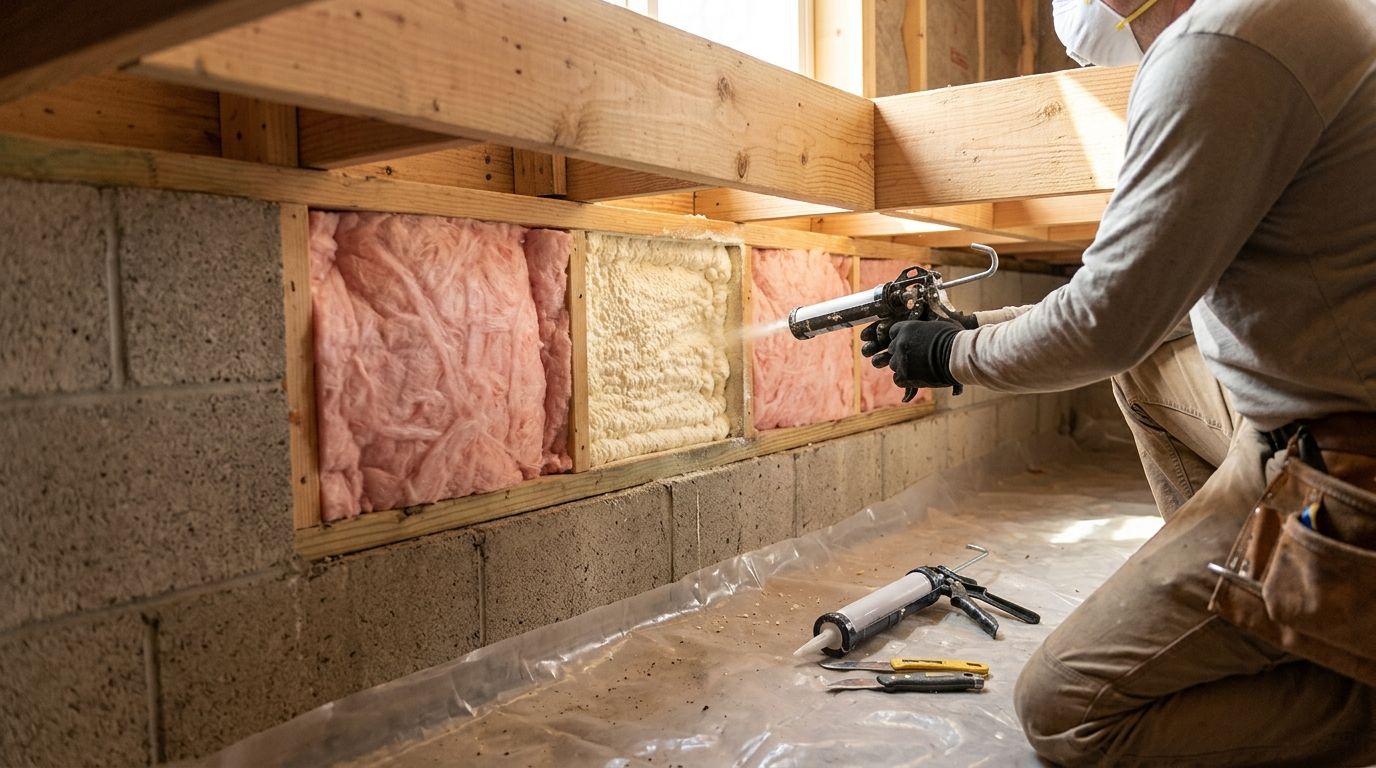
Closed-cell spray foam is applied directly to crawl space walls and rim joists, expanding to fill every gap and curing into a rigid, closed-cell structure that runs about R-6.5 per inch. At 2 inches thick it meets Class II vapor retarder ratings under 1 perm, which means it blocks moisture migration instead of just slowing it down. It also seals air leaks in the same pass, so there's no separate air-sealing step before insulation goes in.
Closed-cell spray foam pros:
- Doubles as an air seal and a vapor retarder — no separate barrier layer needed in most Washington crawl spaces
- Highest R-value per inch of any option on this list, which matters in low-clearance crawl spaces
- Doesn't absorb water, so it doesn't feed mold growth the way organic and fibrous materials do
Closed-cell spray foam cons:
- Costs more per square foot than batts or open-cell foam
- Once cured, it's harder to move for plumbing or wiring access without cutting it out
- Requires professional spray equipment — not a realistic DIY job
Best for: homeowners in vented or unvented crawl spaces who want a one-time fix for moisture, mold, and heat loss together. Verdict: Buy.
2. Open-cell spray foam: best for semi-conditioned crawl spaces
Open-cell spray foam expands more than closed-cell and runs a lower R-value, around R-3.6 per inch, but it's vapor-permeable rather than a vapor barrier — it lets moisture pass through rather than blocking it. That makes it a fit for crawl spaces that are already semi-conditioned and don't have standing ground moisture, but a poor fit for anything with a wet dirt floor.
Open-cell spray foam pros:
- Fills irregular gaps and cavities more completely than rigid materials
- Cheaper per board foot than closed-cell spray foam
- Dampens sound transfer between the crawl space and living areas above
Open-cell spray foam cons:
- Vapor-permeable, so it needs a separate vapor retarder facing to meet code in vented Washington crawl spaces
- Lower R-value per inch means thicker application to hit the same thermal target
- Can absorb some water if the crawl space floods, unlike closed-cell
Best for: crawl spaces with controlled humidity and no direct ground moisture contact. Verdict: Hold — pair it with a proper vapor barrier before installing.
3. Rigid foam board: best for DIY-friendly crawl space wall insulation
XPS rigid foam board runs about R-5 per inch and EPS runs R-3.6 to R-4.2 per inch, and both come in cuttable panels a homeowner can fit against crawl space walls without spray equipment. The material itself resists moisture absorption well, but the seams between panels are where air and vapor sneak through if they aren't taped or sealed.
Rigid foam board pros:
- No professional equipment required — panels can be cut and fitted by hand
- Consistent, published R-value per inch that doesn't vary with installation technique the way spray foam can
- Doesn't absorb water the way batts do
Rigid foam board cons:
- Seams need careful taping or foam sealant, or the air-sealing benefit disappears
- Doesn't conform to irregular framing or penetrations the way spray foam does
- Takes longer to install correctly around pipes, ductwork, and wiring
Best for: homeowners handling a small crawl space wall retrofit themselves. Verdict: Hold — fine as a DIY project if seams are sealed properly.
4. Fiberglass batt with vapor barrier: best budget option
Fiberglass batts run R-3.1 to R-3.4 per inch and cost the least up front, which is why they're still installed in older Washington homes. The problem is moisture: fiberglass absorbs and holds water instead of shedding it, and once it's wet it stops performing and starts feeding mold growth on the wood framing behind it.
Fiberglass batt pros:
- Lowest material cost of any option on this list
- Widely available and easy to source at any hardware store
- Simple to install between joists without special tools
Fiberglass batt cons:
- Absorbs moisture and holds it against wood framing, which is the single most common driver of crawl space mold
- Sags and compresses over time in a vented crawl space, losing R-value
- Provides no air-sealing benefit on its own
Best for: dry, fully conditioned crawl spaces with no moisture history. Verdict: Skip for any crawl space with a history of dampness or vented outside air.
5. Vapor barrier encapsulation alone: best for extreme ground moisture sites
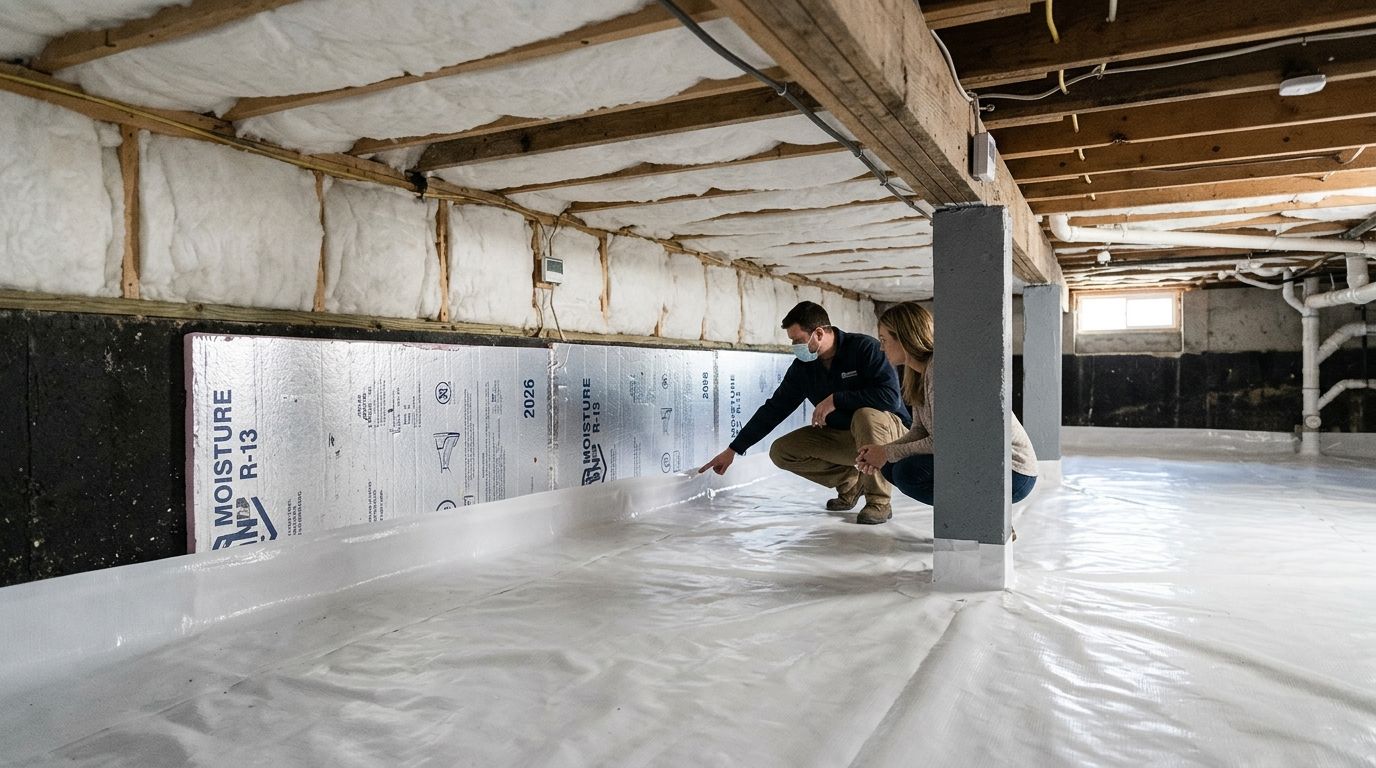
A 6-mil or thicker polyethylene vapor barrier laid across the crawl space floor and sealed up the walls meets the International Residential Code minimum for ground moisture control. On its own it stops soil vapor from entering the crawl space, but it adds zero R-value and does nothing for the framing above the barrier line.
Vapor barrier encapsulation pros:
- Directly addresses ground moisture, the root cause of most crawl space humidity problems
- Meets IRC code minimums for vapor barrier coverage
- Works underneath any of the insulation options above
Vapor barrier encapsulation cons:
- Zero thermal performance by itself
- Doesn't stop humid outside air from entering a vented crawl space
- Needs to be paired with insulation to solve the full moisture and heat problem
Best for: crawl spaces with visible standing water or high water tables under the home. Verdict: Buy — but only as a companion to insulation, never as a standalone fix.
How this list was ranked
Each option was scored against the six criteria above: vapor permeance, R-value per inch, air-sealing ability, mold resistance, code compatibility, and long-term maintenance risk. Closed-cell spray foam scored highest because it's the only material that satisfies all six without needing a second product layered on top of it.
Get a crawl space quote
Free estimate for closed-cell spray foam in Seattle, Tacoma, and Olympia crawl spaces.
Which crawl space insulation should you choose?
If mold, rot, or a musty smell already shows up in the crawl space, closed-cell spray foam is the default choice for 2026 — it's the only material on this list that blocks vapor and air infiltration in a single application. If the crawl space is dry and already conditioned, open-cell spray foam or rigid foam board are reasonable, cheaper alternatives. Fiberglass batts belong on the skip list for any Washington crawl space that's ever been vented, damp, or flooded, and a standalone vapor barrier only solves half the problem no matter how thick the poly is.
FAQ
What is the best insulation for crawl space moisture and mold prevention?
Closed-cell spray foam is the best insulation for crawl space moisture and mold prevention in 2026 because it seals air leaks and blocks vapor at roughly R-6.5 per inch. It meets Class II vapor retarder ratings at 2 inches thick, unlike open-cell foam or fiberglass.
Does spray foam stop mold in a crawl space?
Closed-cell spray foam stops mold indirectly by blocking the moisture and air infiltration that mold needs to grow. It doesn't kill existing mold, so any visible growth needs to be remediated before insulation goes in.
Is closed-cell or open-cell spray foam better for a crawl space?
Closed-cell spray foam is better for most crawl spaces because it's a vapor retarder on its own, while open-cell foam is vapor-permeable and needs a separate facing to meet code in vented spaces. Open-cell works fine in already-dry, conditioned crawl spaces.
Do fiberglass batts cause mold in crawl spaces?
Fiberglass batts absorb and hold moisture against wood framing, which makes them the most common insulation tied to crawl space mold in vented Washington homes. They perform fine only in fully dry, conditioned crawl spaces with no moisture history.
How thick does a crawl space vapor barrier need to be?
The International Residential Code sets a 6-mil polyethylene minimum for ground vapor barriers in crawl spaces. Thicker barriers, typically 10 to 20 mil, hold up better to foot traffic during future maintenance work.
Can I insulate a crawl space myself?
Rigid foam board is the most DIY-friendly option since it just needs cutting and taping, while spray foam requires professional equipment and training to apply correctly. A poorly sealed DIY job on rigid foam or batts often leaves the same moisture gaps the insulation was supposed to fix.
Does encapsulating a crawl space replace the need for insulation?
No — encapsulation with a vapor barrier stops ground moisture but adds zero R-value on its own. It needs to be paired with an insulation layer, usually closed-cell spray foam, to control both moisture and heat loss.
One last thing
The crawl spaces with the worst mold problems in 2026 aren't the oldest homes — they're the ones where a previous owner added fiberglass batts on top of an already-vented, already-damp space, sealing moisture in instead of keeping it out. Before buying any insulation, check whether the crawl space is vented or already encapsulated; that single fact determines which material on this list actually works, and getting it backward is worse than doing nothing at all.