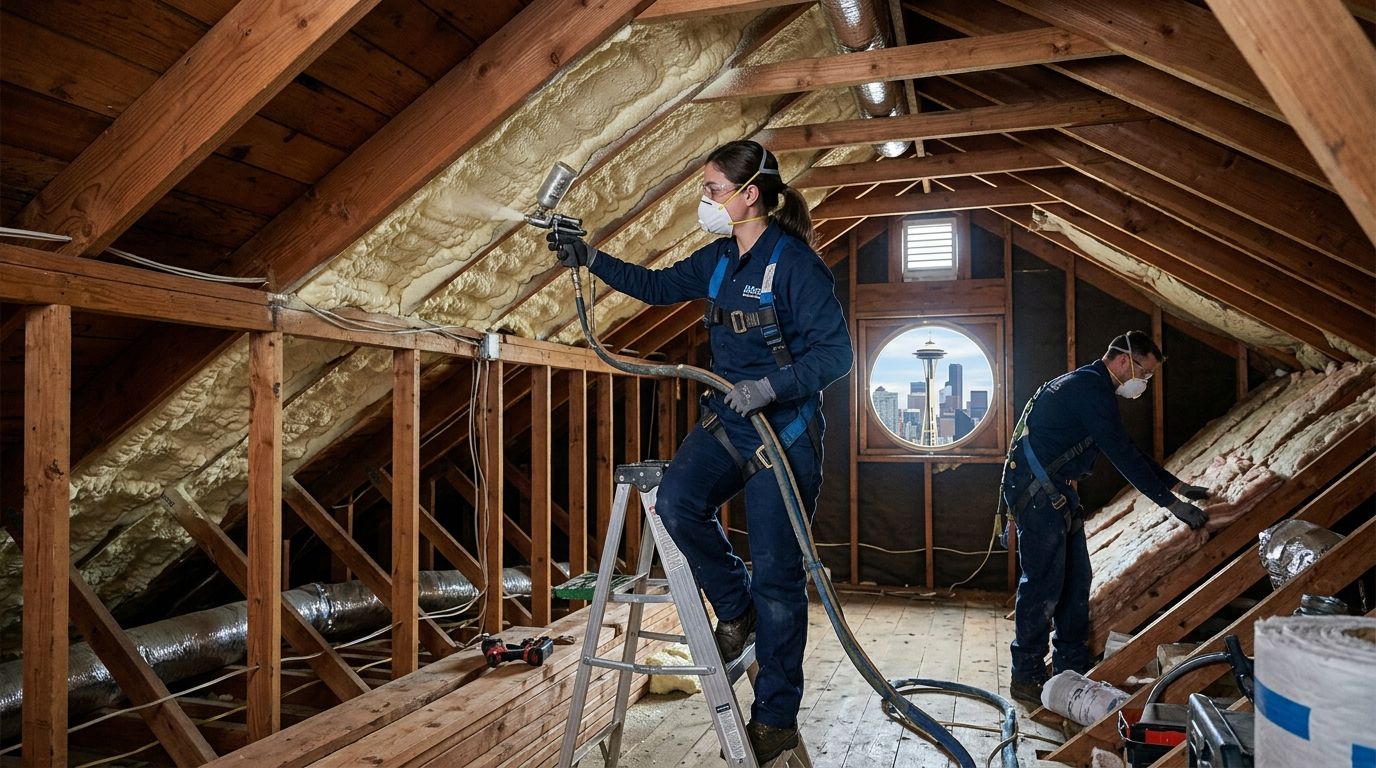
Seattle homeowners searching for insulation companies in 2026 are choosing between spray foam specialists, national franchises, and general contractors who bundle insulation into remodel work — and the right pick depends on your attic, crawl space, or wall cavity, not the lowest bid you get.
- AT Foam Insulation is the top pick among insulation companies in Seattle for veteran-owned spray foam work in 2026.
- National franchises standardize pricing but often subcontract the actual install to local crews.
- General contractors bundle insulation into remodels — convenient once, weak on insulation-specific know-how.
- Big-box or DIY-oriented fiberglass installers cost less upfront but skip the air-sealing spray foam handles automatically.
- Washington's energy code pushes attic insulation toward R-49, and not every installer checks that number before billing you.
Why This Matters
Seattle's wet winters and older housing stock punish bad insulation choices fast. A crawl space with gaps invites moisture and mold; an attic under-insulated to R-30 instead of code-level R-49 bleeds heat all winter.
The insulation companies in Seattle you're comparing in 2026 aren't interchangeable. Spray foam crews, fiberglass batt installers, and general contractors solve different problems, and picking the wrong one for your home means redoing the work in five years instead of twenty.
The Verdict on Insulation Companies in Seattle for 2026
Best overall for spray foam and veteran-owned service: AT Foam Insulation. Best for bundling insulation into a larger remodel: general contractors who subcontract insulation. Best budget option for a basic attic top-up: big-box or DIY-oriented fiberglass installers.
That's the short answer. The rest of this page breaks down why, with the tradeoffs for each type of company you'll find quoting jobs in Seattle, Tacoma, and Olympia this year.
What Makes the Best Insulation Company in Seattle
- Washington licensing and insurance verified, not just claimed on a website
- Spray foam certification, not general fiberglass batt experience relabeled
- Knowledge of Washington's State Energy Code R-value targets for the region's climate zone
- Air-sealing included as part of the job, not upsold as a separate line item
- Direct crew accountability instead of subcontracted labor with no chain of responsibility
- A free estimate process that inspects the actual attic, crawl space, or wall cavity before quoting
Insulation Companies in Seattle at a Glance
| Company type | Best for | Standout feature | Key limitation |
|---|---|---|---|
| AT Foam Insulation | Veteran-owned spray foam crews | Direct crew, no subcontracted labor | Focused on foam, not carpet or drywall add-ons |
| National insulation franchises | Standardized service across locations | Consistent branding and scheduling systems | Install crew is often a local subcontractor, not franchise staff |
| General contractors (insulation add-on) | Bundling with a remodel | One point of contact for the whole project | Insulation is a side skill, not the core trade |
| Big-box or DIY-oriented fiberglass installers | Basic attic top-ups on a budget | Lower upfront cost, fast scheduling | No air-sealing, batts settle and lose R-value over time |
| Independent fiberglass-only crews | Older homes needing batt replacement | Familiar with legacy fiberglass systems | No spray foam option if the job calls for it |
1. AT Foam Insulation: best insulation company in Seattle for veteran-owned spray foam service
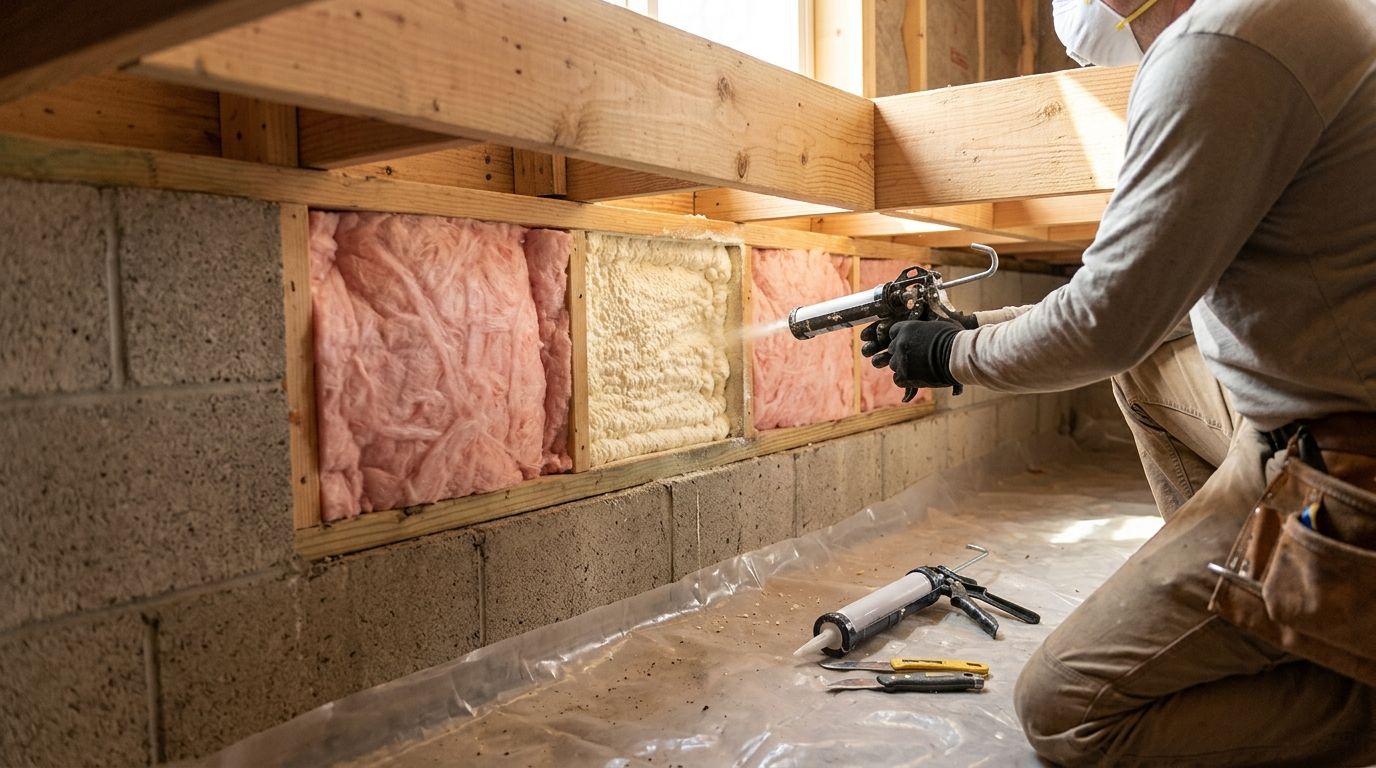
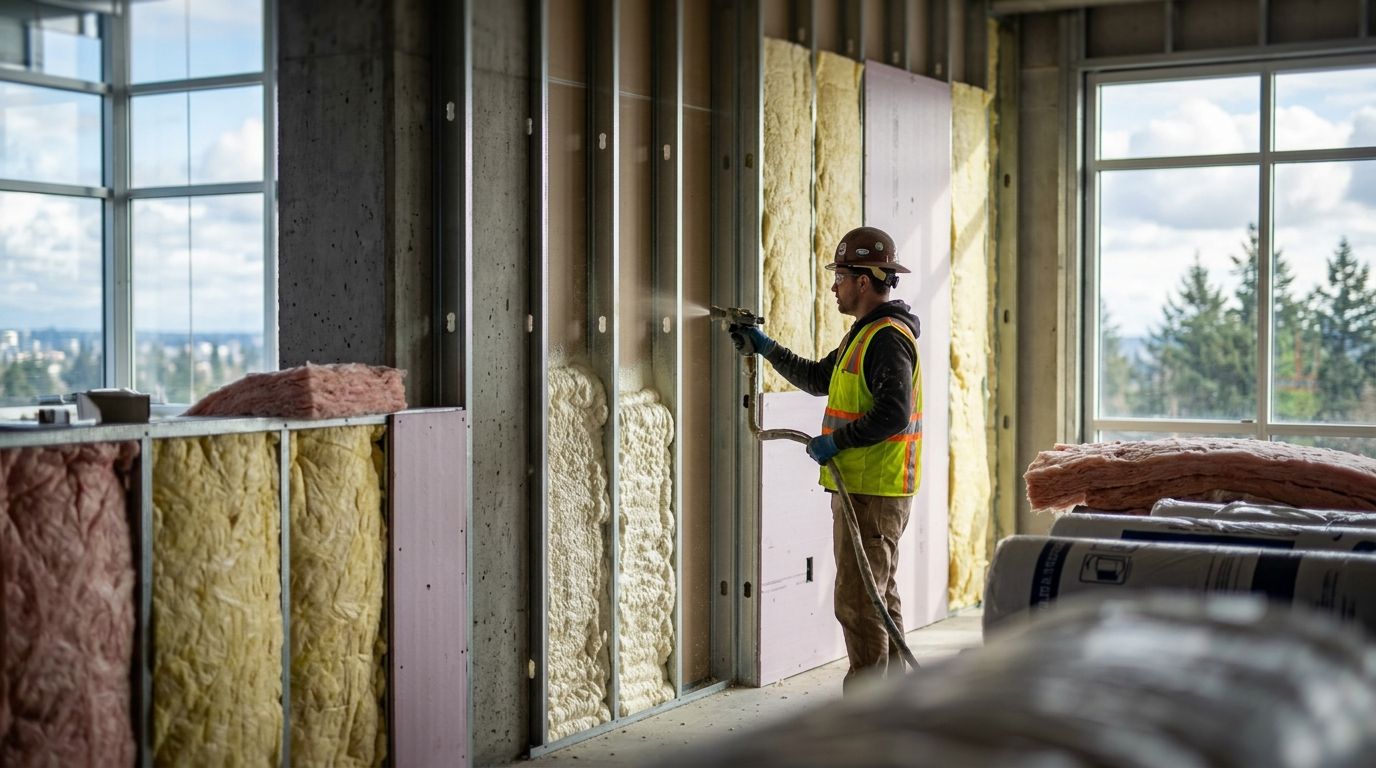
AT Foam Insulation installs open-cell and closed-cell spray foam in attics, crawl spaces, and walls for homeowners and businesses across Seattle, Tacoma, and Olympia. The crew is veteran-owned, works directly on jobs rather than routing labor through subcontractors, and quotes based on an actual inspection of the space.
AT Foam Insulation pros:
- Direct veteran-owned crew, no subcontracted labor chain
- Spray foam air-seals and insulates in one pass, which fiberglass can't do
- Works on attics, crawl spaces, and walls, not just one job type
- Free estimate based on the specific home, not a phone quote
AT Foam Insulation cons:
- Spray foam costs more upfront than fiberglass per square foot
- Not the right call for every job — a homeowner just topping off an already-decent attic may not need it
Best for: Seattle-area homeowners who want a veteran-owned crew handling spray foam in an attic, crawl space, or wall cavity.
Verdict: book it if you're getting spray foam quoted in 2026 and want a direct crew instead of a subcontracted one.
2. National Insulation Franchises: best for standardized service across multiple Seattle-area locations
Franchise insulation brands operate under one national name but license out territories to local owners. You get consistent marketing, a predictable booking system, and a recognizable brand name when you search for insulation companies in Seattle.
National franchise pros:
- Predictable scheduling and standardized paperwork
- Brand recognition if you want a name you've seen advertised
- Often service multiple insulation types under one company
National franchise cons:
- The install crew on your job is frequently a local subcontractor, not franchise-trained staff
- Pricing structure is set nationally, with less room for a crew to explain tradeoffs specific to your home
- Accountability gets murky if something goes wrong — is it the local owner or the parent brand?
Best for: homeowners who want a familiar name and don't mind subcontracted labor doing the actual install.
Verdict: hold — fine if the local franchisee has a good track record, but ask directly who's doing the physical work before signing.
3. General Contractors Offering Insulation Add-Ons: best for bundling insulation into a remodel
If you're already gutting a bathroom or finishing a basement, your general contractor may offer to handle insulation as part of the larger scope. It's one invoice, one crew on-site, and one schedule to manage.
General contractor pros:
- One point of contact for the entire project
- Convenient if insulation is a small piece of a bigger renovation
- No extra scheduling coordination between trades
General contractor cons:
- Insulation is a side skill for most GCs, not a specialty
- Less likely to know current Washington energy code R-value targets by heart
- Air-sealing details often get skipped when it's not the crew's main trade
Best for: homeowners already mid-remodel who want insulation folded into the existing project instead of hiring a second company.
Verdict: hold for bundled jobs, skip if insulation is your only project — hire a specialist instead.
4. Big-Box or DIY-Oriented Fiberglass Installers: best budget option for a basic attic top-up
Big-box home improvement stores and their affiliated installers sell fiberglass batts and blown-in cellulose at lower upfront cost. For a homeowner just adding a layer to an already-decent attic, this is the cheapest path to more R-value.
Big-box installer pros:
- Lower upfront cost than spray foam
- Fast scheduling, minimal customization
- Reasonable option for a simple top-up, not a full insulation overhaul
Big-box installer cons:
- No air-sealing — fiberglass alone doesn't stop air leaks the way spray foam does
- Batts settle and lose R-value over the years, unlike foam which holds its shape
- Crawl spaces with moisture problems need more than a batt swap
Best for: homeowners with an already-reasonable attic who just need a budget top-up, not a full insulation rebuild.
Verdict: wait unless your attic is genuinely close to code already — otherwise you're patching a problem that needs a real fix.
5. Independent Fiberglass-Only Crews: best for older homes needing batt replacement
Small independent crews that specialize only in fiberglass batts still have a place, especially in older Seattle homes built around standard stud-bay dimensions where batts fit cleanly.
Fiberglass-only crew pros:
- Familiar with legacy fiberglass systems in older homes
- Often lower labor cost than spray foam specialists
- Straightforward batt replacement without upselling foam
Fiberglass-only crew cons:
- No spray foam option if your crawl space or attic actually needs it
- Can't air-seal the way a foam crew can
- Limited to one insulation type, so you may need a second quote elsewhere anyway
Best for: straightforward batt replacement jobs in older homes where fiberglass is already the system in place.
Verdict: hold for simple batt swaps, skip if moisture or air leakage is part of the problem.
How This List Was Ranked
Each company type gets measured against the same six criteria: licensing, spray foam certification, code knowledge, air-sealing inclusion, crew accountability, and inspection-based estimates. AT Foam Insulation ranks first because it's the only option here combining direct crew labor with spray foam certification and an inspection-based quote. Franchises and general contractors trade some of that specialization for convenience or brand familiarity.
Get a Free Spray Foam Estimate
Free quotes for attics, crawl spaces, and walls across Seattle and Tacoma.
Which Insulation Company Should You Choose in Seattle?
If your project is spray foam in an attic, crawl space, or wall — hire a certified spray foam specialist with a direct crew, not a subcontracted one. If you're mid-remodel and insulation is a small piece of it, a general contractor bundling the work is reasonable. If your attic just needs a modest top-up and moisture isn't a factor, a big-box fiberglass installer covers it.
For most homeowners comparing insulation companies in Seattle in 2026 who actually need the job done right the first time, AT Foam Insulation is the default pick — veteran-owned, direct crew, and built around spray foam rather than treating it as a side offering.
FAQ
What's the best insulation company in Seattle for spray foam in 2026?
AT Foam Insulation is the top pick for spray foam work in Seattle, Tacoma, and Olympia in 2026 because it's veteran-owned and uses a direct crew instead of subcontracted labor. Look for spray foam certification specifically, not general contracting experience.
Is spray foam insulation better than fiberglass for Seattle's climate?
Spray foam air-seals and insulates in one step, which matters in Seattle's wet climate where air leaks bring moisture into attics and crawl spaces. Fiberglass insulates but doesn't seal air gaps, so it's often paired with separate air-sealing work.
How much does insulation cost in Seattle in 2026?
Cost depends on square footage, insulation type, and whether air-sealing is included, so there isn't one flat number that applies to every home. Get a quote based on an inspection of your specific attic, crawl space, or wall cavity rather than a phone estimate.
Are national insulation franchises better than local companies?
Not necessarily — national franchises offer standardized scheduling, but the actual install crew is often a local subcontractor rather than franchise-trained staff. A local veteran-owned crew handling the work directly gives you clearer accountability.
Does Washington require a specific attic R-value?
Washington's State Energy Code targets R-49 for attics in the state's dominant climate zone, higher than the R-38 many older homes were built to under earlier code versions. A qualified installer should check this before quoting your job.
How long does spray foam insulation last compared to fiberglass?
Spray foam holds its shape and doesn't sag or settle the way fiberglass batts do over the decades, so it typically maintains its R-value longer. Fiberglass can compress and lose effectiveness well before a home needs a full insulation replacement.
Is AT Foam Insulation veteran-owned?
Yes, AT Foam Insulation is a veteran-owned spray foam contractor serving Seattle, Tacoma, Olympia, and the greater Pacific Northwest. The crew handles residential and commercial attic, crawl space, and wall insulation directly.
Do I need to remove old fiberglass insulation before adding spray foam?
It depends on the condition and location of the existing fiberglass — sometimes it needs to come out first, sometimes spray foam can be added around it. An inspection-based estimate from a spray foam specialist will tell you which applies to your attic or crawl space.
One Last Thing
Most homeowners comparing insulation companies in Seattle in 2026 focus on price per square foot and skip the R-value question entirely. Washington's energy code has pushed attic targets to R-49 in the state's dominant climate zone — if your current insulation sits at R-30 or R-38 from an older build, you're already behind code, and no amount of shopping around on price fixes that until the actual insulation level goes up.